#83 Ukha | Russian Fish Soup
Yuri Miyajima Russian Forest

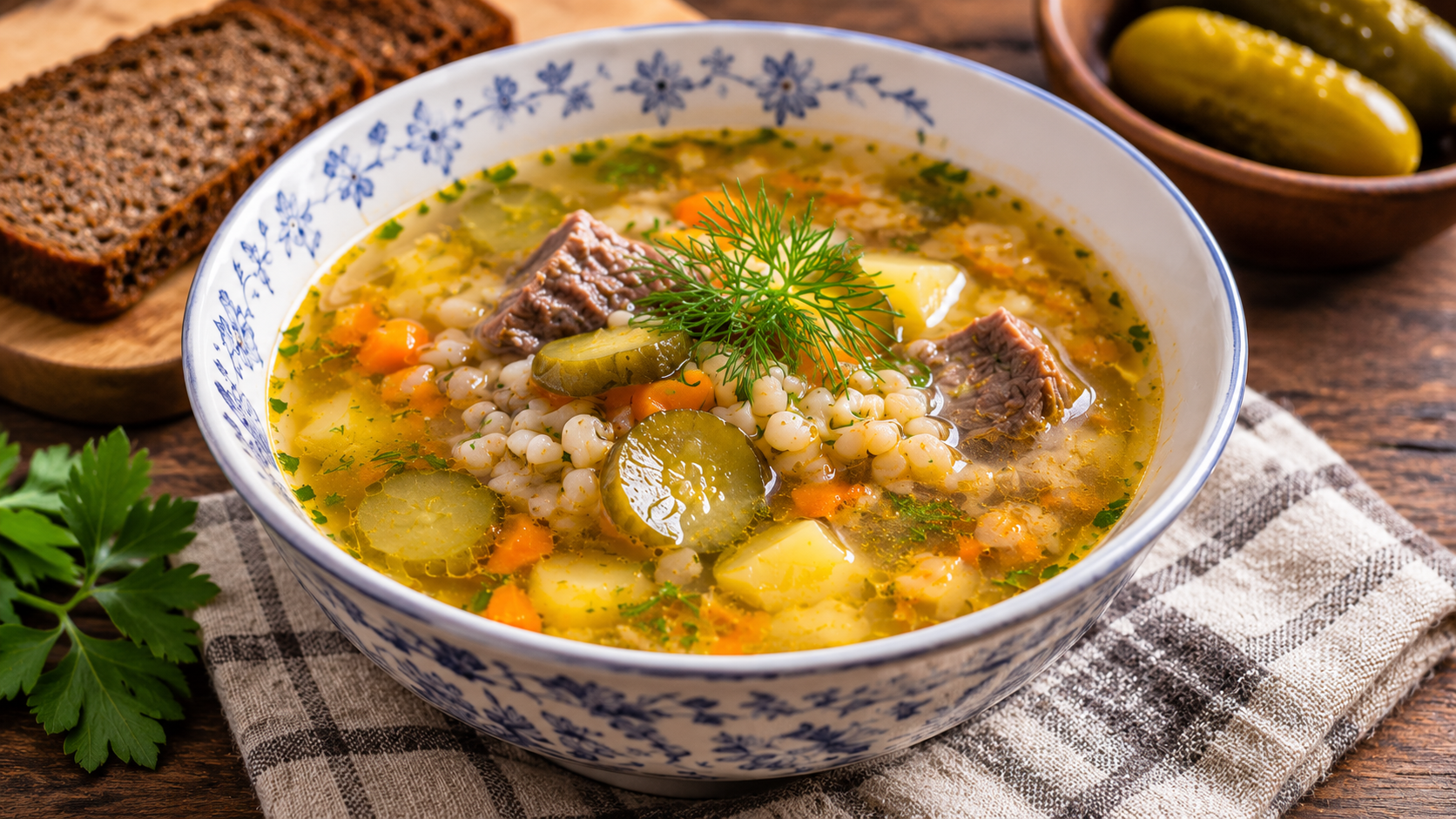
Russian cuisine includes many warm soups that are particularly popular during the colder months. One of these is rassolnik (рассо́льник), a traditional soup known for its distinctive sour flavor.
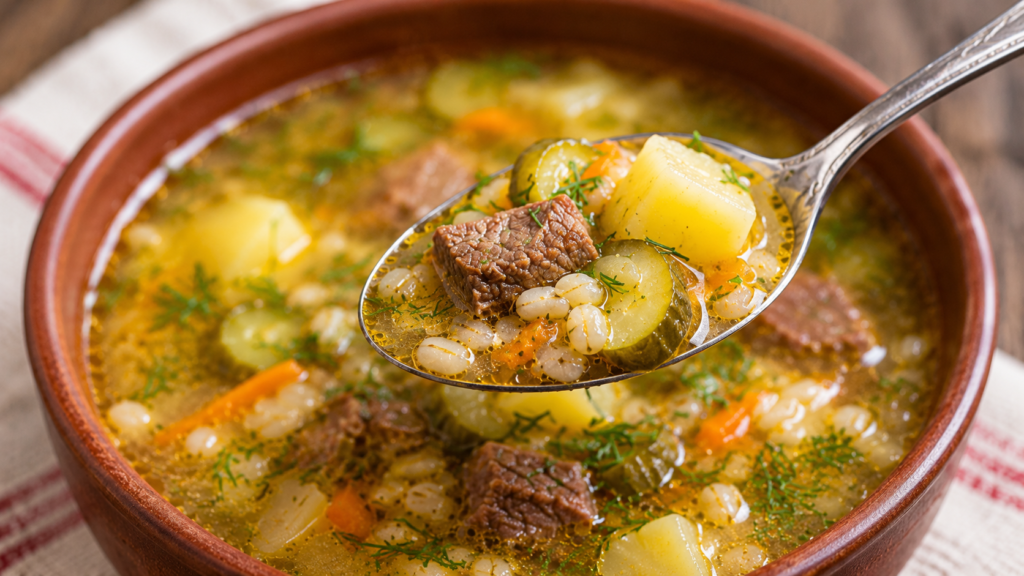
Rassolnik is prepared using salt-pickled cucumbers, vegetables, meat, and grains.
Its most distinctive characteristic is the use of salt-pickled cucumbers as an ingredient. These cucumbers are a traditional preserved food deeply rooted in Russian culinary culture and are an essential component of rassolnik.
Rassolnik also has a long history and is closely connected to Russia’s traditional food preservation practices and the development of home cooking.
In this article, I will explain the characteristics and history of rassolnik, its main ingredients, traditional preparation methods, and variations found across regions and households.
Rassolnik (рассо́льник) is a traditional Russian soup made by adding salt-pickled cucumbers to a broth containing meat and vegetables.
Salt-pickled cucumbers are a traditional Russian preserved food made by fermenting cucumbers in a saltwater brine. When added to soup, they combine their characteristic sourness with the savory flavors of meat and vegetables, creating a rich and complex taste.
In addition to vegetables such as potatoes, carrots, and onions, rassolnik may contain grains such as barley or rice.
Typical ingredients include:
Combining these ingredients produces a hearty and satisfying soup.
Rassolnik is widely enjoyed as a home-cooked dish in Russia and is also served in cafeterias and restaurants.
In Russia, eating warm soup for lunch or dinner is a common tradition, and rassolnik is one of the country’s representative soup dishes.
Particularly during the colder months, it is often enjoyed as a substantial meal that helps warm the body.
The name rassolnik comes from the Russian word рассо́л, which refers to brine or the liquid used to preserve vegetables in salt.
In Russia, vegetables such as cucumbers and cabbage have long been preserved through salting and fermentation. Salt-pickled cucumbers, in particular, have traditionally been a common preserved food in Russian households.
In addition to the cucumbers themselves, rassolnik may also contain some of the brine in which they were fermented.
Sour soups made with cucumber brine and similar ingredients have existed in Russian cuisine for centuries.
One dish considered a predecessor of rassolnik is a soup called kalya (калья́).
Kalya was prepared using ingredients such as fish, meat, salt-pickled cucumbers, and brine. Versions made with fish are particularly well known.
In historical Russia, preserving vegetables and fish through salting was a widespread practice. Such preserved foods played an important role in maintaining food supplies during the country’s long winters.
The use of salted and fermented ingredients in cooking also contributed to the development of a culinary tradition that appreciated distinctive sour and salty flavors.
During the 18th and 19th centuries, dishes resembling modern rassolnik gradually became more widespread.
By the 19th century, the name rassolnik had begun appearing in cookbooks and other culinary publications, and preparation methods resembling those used today gradually developed.
During this period, rassolnik was prepared using ingredients such as beef kidneys and other organ meats, vegetables, and grains.
Over time, rassolnik became a popular home-cooked dish and was also served in cafeterias and restaurants.
During the Soviet era in the 20th century, hearty versions of rassolnik made with potatoes and barley became increasingly widespread.
Leningrad-style rassolnik, in particular, became popular in cafeterias and other dining establishments as a dish prepared with relatively accessible ingredients.
Today, rassolnik is recognized as one of Russia’s traditional soups and continues to be enjoyed in homes and restaurants.
One of the most important ingredients determining the flavor of rassolnik is salt-pickled cucumbers (солёные огурцы́).
Traditional Russian salt-pickled cucumbers are preserved by immersing them in saltwater brine and allowing them to undergo lactic acid fermentation.
Typically, cucumbers are placed in brine with ingredients such as dill, garlic, and horseradish leaves to enhance their flavor.
As fermentation progresses, lactic acid bacteria convert sugars into lactic acid, giving the cucumbers their distinctive sour taste.
Preservation in brine also extends their shelf life, allowing harvested cucumbers to be stored for extended periods.
In Russia, such preserved foods developed as an important means of maintaining food supplies throughout the winter.
Russian distinguishes between salt-pickled cucumbers and cucumbers preserved in vinegar-based marinades.
Traditional rassolnik is generally prepared using солёные огурцы́.
During preparation, the cucumbers are cut into strips or cubes before being added to the soup.
A small amount of cucumber brine may also be added to adjust the overall sourness and saltiness of the broth.
The brine contains acidity produced during fermentation, along with flavors from the herbs and other aromatic ingredients used in the pickling process.
These characteristics help create the distinctive taste of rassolnik.
Various types of meat and grains are used in rassolnik.
Traditional recipes have included beef and organ meats such as beef kidneys.
In Russian, beef is called говя́дина, while kidneys are called по́чки.
Rassolnik made with beef kidneys is particularly well known as one of the traditional variations of the dish.
Kidneys have a distinctive flavor, and when properly prepared and simmered, they add a rich savory taste to the soup.
When beef is used, bone-in cuts may be simmered slowly to create a flavorful broth infused with the taste of the meat.
In home cooking, chicken or pork may also be used.
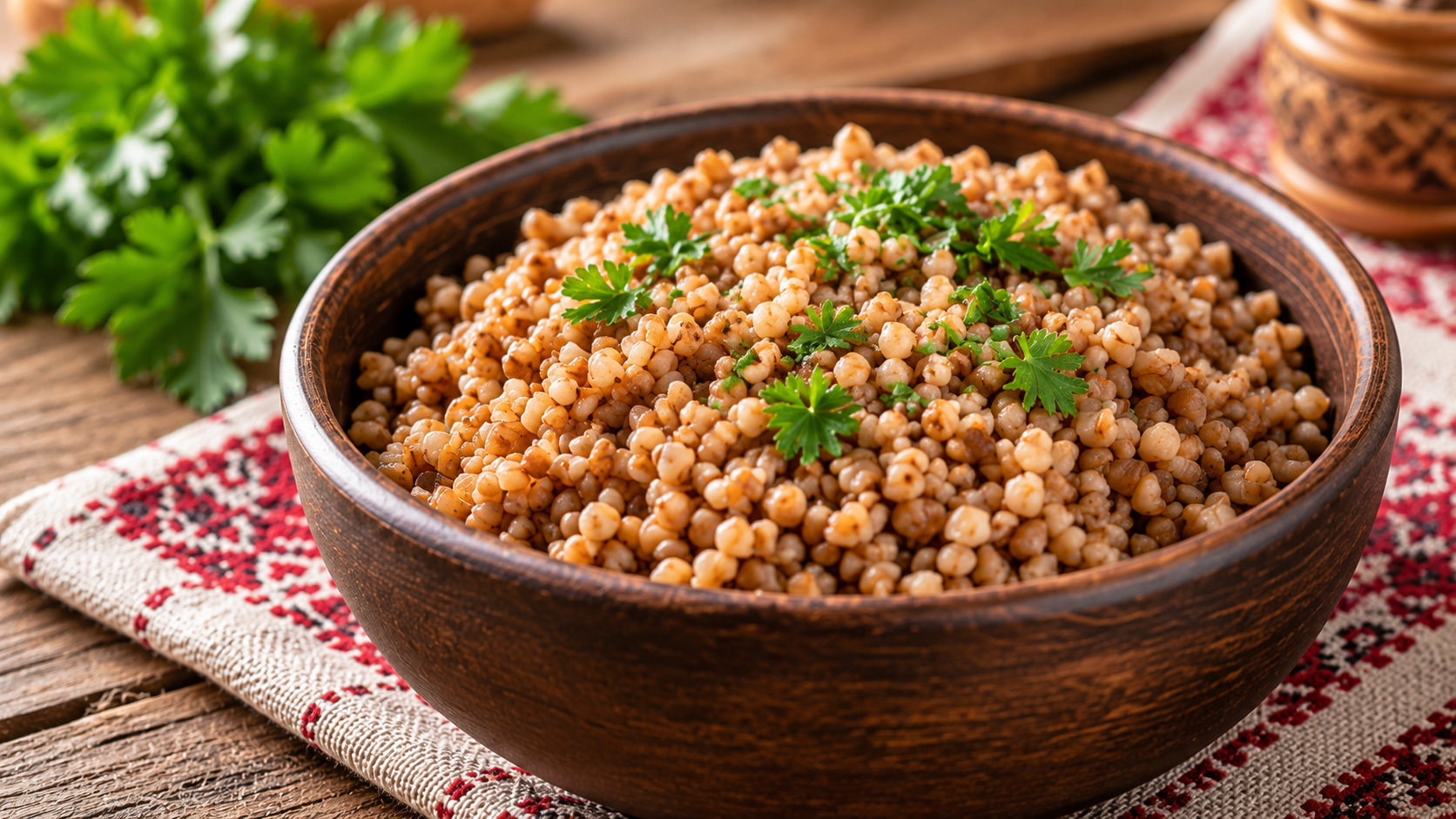
Grains are another common ingredient in rassolnik, with barley being one of the most representative choices.
Pearl barley is called перло́вая крупа́ in Russian and is widely used in Russian cuisine, particularly in soups and porridges.
Some recipes use rice instead of barley.
Rice is called рис in Russian and generally requires less cooking time than barley.
Rice also produces a relatively soft texture and blends well with the flavors of meat and vegetables.
In this way, rassolnik offers a variety of flavors and textures depending on the combination of meat and grains used.
Rassolnik is a traditional Russian soup prepared with salt-pickled cucumbers.
By adding these cucumbers to a soup made with meat, vegetables, and grains, the dish develops its distinctive sour and salty flavor.
The most important points are as follows:
Rassolnik is closely connected to Russia’s traditional food preservation culture.
The use of salt-pickled cucumbers in soup reflects the practical knowledge developed by generations of Russians who preserved vegetables and incorporated them into everyday meals.