#75 Solyanka | Russian Soup Characterized by Its Sour and Salty Flavors
Yuri Miyajima Russian Forest

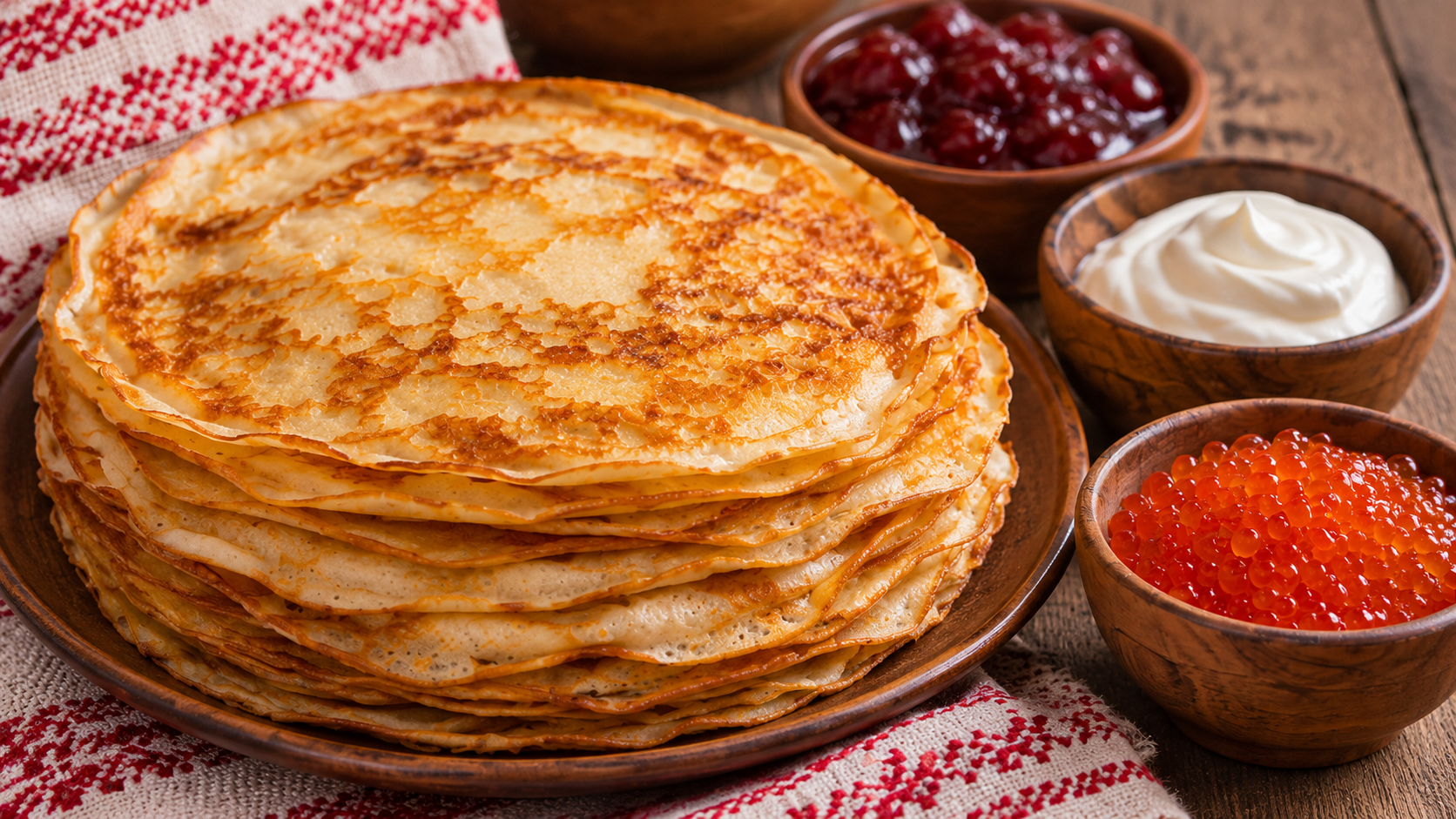
Blini (блины́) are traditional Russian pancakes made from ingredients such as flour, milk, and eggs.
They are commonly served with butter, sour cream, or jam. They can also be filled with ingredients such as meat, fish, and mushrooms.
Blini are also closely associated with traditional Russian celebrations. During Maslenitsa, a festival celebrating the end of winter and the arrival of spring, blini are enjoyed as one of the most representative traditional foods.
In this article, I will explain the characteristics and history of blini, their basic preparation methods, common ways of serving them, and their connection to traditional Russian celebrations.
Blini are traditional Russian pancakes made by cooking a batter of flour, milk, eggs, and other ingredients in a frying pan.
In Russian, the following words are used:
The plural form блины́ is commonly used when referring to the dish.
Blini are made by spreading the batter across the surface of a frying pan to create a thin, round pancake. Their appearance is similar to that of French crêpes.
There are also many different varieties of blini.
Today, thin blini made with wheat flour are particularly common. Traditionally, however, blini have also been prepared with buckwheat flour or yeast-fermented batter, producing thicker pancakes.
Blini can also be combined with a wide variety of sweet and savory ingredients.
For example, they may be served with butter or sour cream, while jam or honey can be added for a sweeter flavor. They can also be filled with meat, fish, or mushrooms and enjoyed as a substantial meal.
As a result, blini are eaten in many different settings, including breakfast, snacks, main meals, and desserts.
There are several theories about the origins of blini, but it is generally believed that the East Slavic peoples prepared pancake-like dishes made from grains from an early period.
In Russia, grains such as wheat, rye, and buckwheat have long played an important role in everyday diets.
Grinding these grains into flour, mixing them with water or dairy products, and cooking the resulting batter requires relatively simple equipment.
Blini developed within this broader tradition of grain-based cooking.
In addition to being an everyday food, blini have historically been used in traditional rituals and celebrations.
They are particularly associated with customs honoring ancestors and remembering the deceased. In traditional Russian society, blini were sometimes prepared for funerals and memorial meals as part of the commemoration of those who had died.
Blini are also closely connected to Maslenitsa, a traditional celebration marking the end of winter and the arrival of spring.
As Christianity spread throughout Russia, Maslenitsa became established as a celebration held before Great Lent in the Russian Orthodox tradition.
During this period, foods made with dairy products and eggs were consumed, and blini became one of the most representative dishes.
Traditional blini also included thicker varieties made with buckwheat flour and yeast. In the past, they were often baked in traditional Russian ovens, and ingredients and preparation methods varied by region.
Blini continued to be passed down as a form of home cooking, and by the 19th century, various recipes were being recorded in cookbooks.
Today, thin blini are widely enjoyed and are regarded as one of Russia’s most representative traditional dishes.
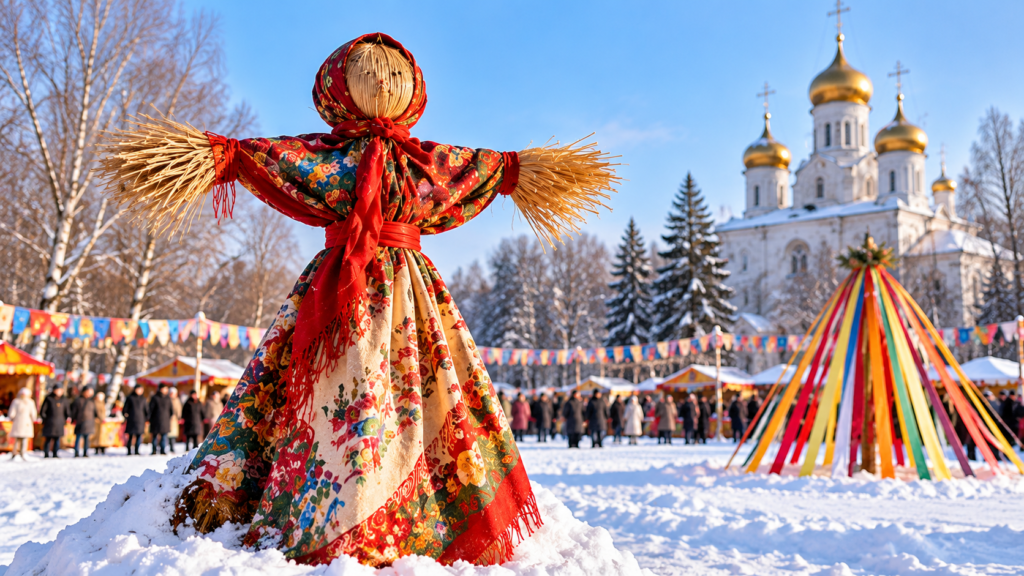
One of the traditional Russian celebrations most closely associated with blini is Maslenitsa (Ма́сленица).
Maslenitsa is a festival celebrating the end of winter and the arrival of spring. It is one of the most representative celebrations in Russian traditional culture.
Maslenitsa is believed to have connections with seasonal customs that existed before the spread of Christianity. As Christianity became established in Russia, the celebration also became associated with the Russian Orthodox liturgical calendar.
Today, Maslenitsa takes place during the week immediately preceding Great Lent, the period of prayer and abstinence leading up to Easter.
During Maslenitsa, meat is avoided, while dairy products such as milk and butter, as well as eggs, are permitted. Consequently, blini, which are made using these ingredients, are commonly eaten throughout the celebration.
The round shape and golden-brown color of blini also resemble the sun. For this reason, blini are widely recognized as a symbol of the spring sun and its warmth.
During Maslenitsa, families and friends gather to celebrate the arrival of spring while enjoying blini together.
Traditionally, each day of the week was associated with different customs.
For example, the first half of the week involved preparations for the celebration and visits among relatives, while the latter half often featured larger gatherings with singing and dancing.
Other traditional activities associated with Maslenitsa include:
The burning of a straw effigy is particularly well known as a symbolic farewell to winter and a celebration of the arrival of spring.
The final day of Maslenitsa is also known as Forgiveness Sunday.
In Russian, it is called Прощёное воскресе́нье. On this day, people traditionally ask one another for forgiveness and offer forgiveness in return.
This custom is intended to prepare people spiritually for Great Lent, which begins the following day.
In this way, festivals and public celebrations are held throughout Russia during Maslenitsa, with blini served as a central part of the festivities.
In Russian traditional culture, blini are widely recognized as a food symbolizing the sun.
Their round shape, golden-brown color, and warmth when freshly cooked are reminiscent of the sun.
Winters in Russia can be extremely cold, and some regions remain covered in snow for extended periods.
Consequently, the arrival of spring, when daylight hours increase and the snow begins to melt, has long held considerable significance in people’s lives.
In agricultural societies, spring marked the beginning of farming activities, and sunlight and warmth were closely associated with the growth of crops.
Against this background, sunlight, warmth, and hopes for a bountiful harvest became important elements of traditional celebrations welcoming spring.
Blini eaten during Maslenitsa are also associated with this seasonal transition.
Their round shape resembles the sun, and they are regarded as a food symbolizing the transition from winter to spring.
At the same time, blini have a history of being used in rituals honoring ancestors and commemorating the deceased.
In traditional Russian customs, blini were sometimes prepared for funerals and memorial meals.
Therefore, understanding the cultural significance of blini involves considering not only their association with the sun but also their connections with longstanding rituals and food traditions.
Blini also appear in Russian proverbs and idiomatic expressions.
One particularly well-known proverb is:
This proverb describes how the first blin may turn out poorly and lose its intended shape.
When preparing blini, the temperature of the frying pan and the amount of oil can affect how the batter cooks. The batter may stick to the pan or fail to spread evenly.
The first pancake is particularly likely to turn out poorly because the cooking temperature and other conditions often need adjustment.
For this reason, Пе́рвый блин ко́мом. is used to express the idea that initial attempts at something may end in failure.
For example, the proverb may be used when someone begins a new job or attempts something for the first time but does not achieve the desired result.
It can also be used to encourage a positive attitude toward failure.
Another Russian proverb is:
During Maslenitsa, people traditionally enjoy a variety of dishes made with dairy products and eggs, including blini.
However, when Maslenitsa ends, Great Lent begins in the Russian Orthodox tradition, bringing a period of dietary restrictions and abstinence.
Drawing on this contrast between celebration and restraint, the proverb expresses the idea that enjoyable periods and favorable circumstances do not last forever.
For example, it may be used when a period of comfortable living or favorable conditions comes to an end and greater effort or patience becomes necessary.
In this way, blini and Maslenitsa appear in Russian proverbs, reflecting aspects of everyday life and traditional values.
Blini are traditional Russian pancakes that have been enjoyed for centuries.
Made from ingredients such as flour, milk, and eggs, they can be served with a wide variety of sweet and savory accompaniments.
The most important points are as follows:
Today, blini continue to be widely enjoyed in Russian homes and restaurants, remaining a familiar part of everyday Russian cuisine.
During Maslenitsa, the tradition of gathering with family and friends to enjoy blini and celebrate the arrival of spring also continues to be observed.