#74 Shchi | Russian Cabbage Soup
Yuri Miyajima Russian Forest

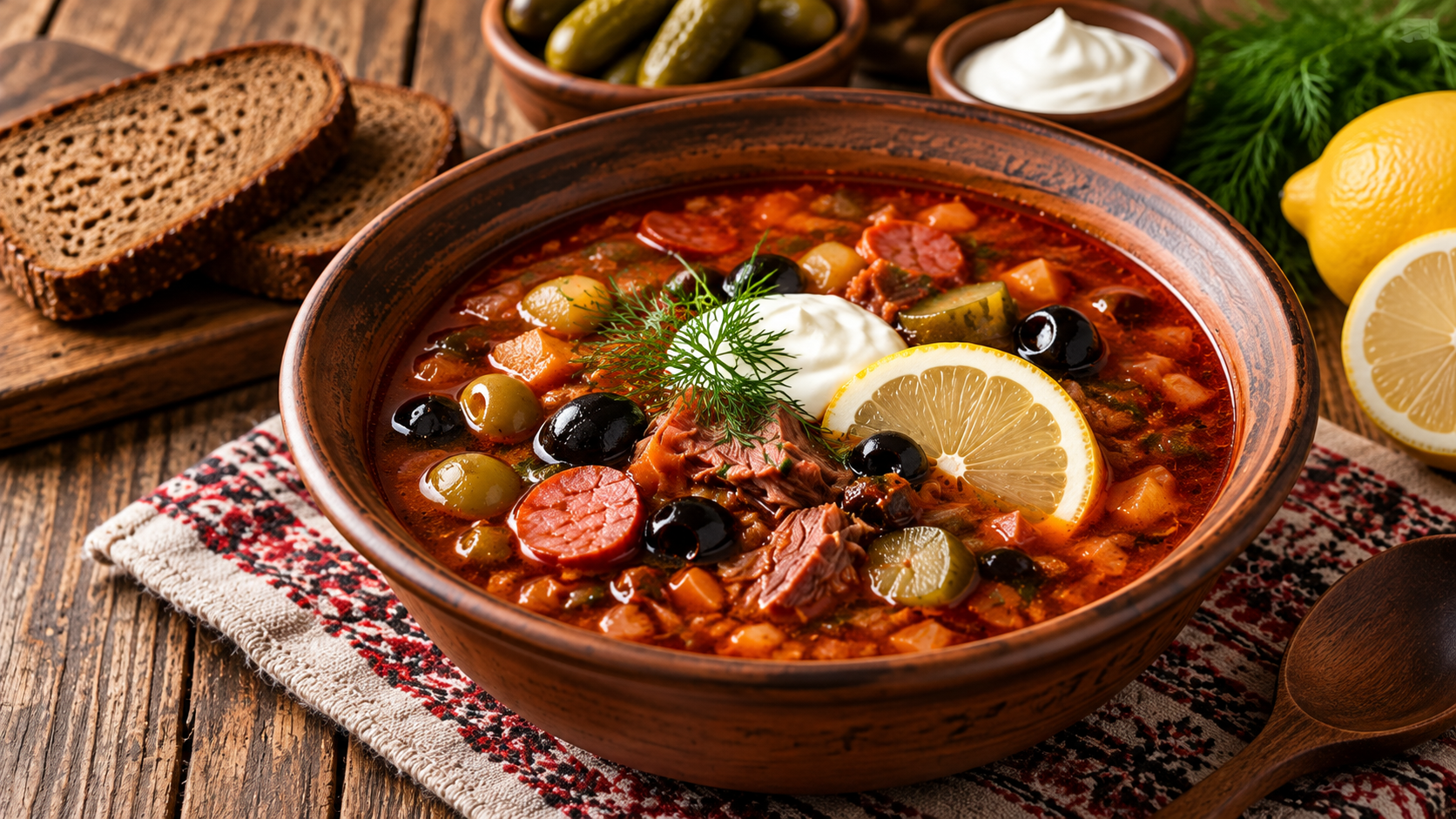
Russia has a wide variety of soups that bring warmth to the table during the colder months. Among them, solyanka (соля́нка) is a traditional dish known for its distinctive combination of sour and salty flavors.
Solyanka is a soup prepared with ingredients such as meat, fish, or mushrooms, together with pickled cucumbers, tomatoes, and other ingredients. Its distinctive flavor combines rich umami with refreshing acidity, making it a popular dish in Russian homes and restaurants.
There are also several varieties of solyanka, each with its own flavor depending on the ingredients and cooking methods used. This diversity is one of the characteristics that make the dish particularly appealing.
In this article, I will explain the main characteristics and history of solyanka, as well as its connection to traditional food preservation practices in Russia.
Solyanka (соля́нка) is a traditional Russian dish characterized by its rich flavor and distinctive combination of sourness and saltiness.
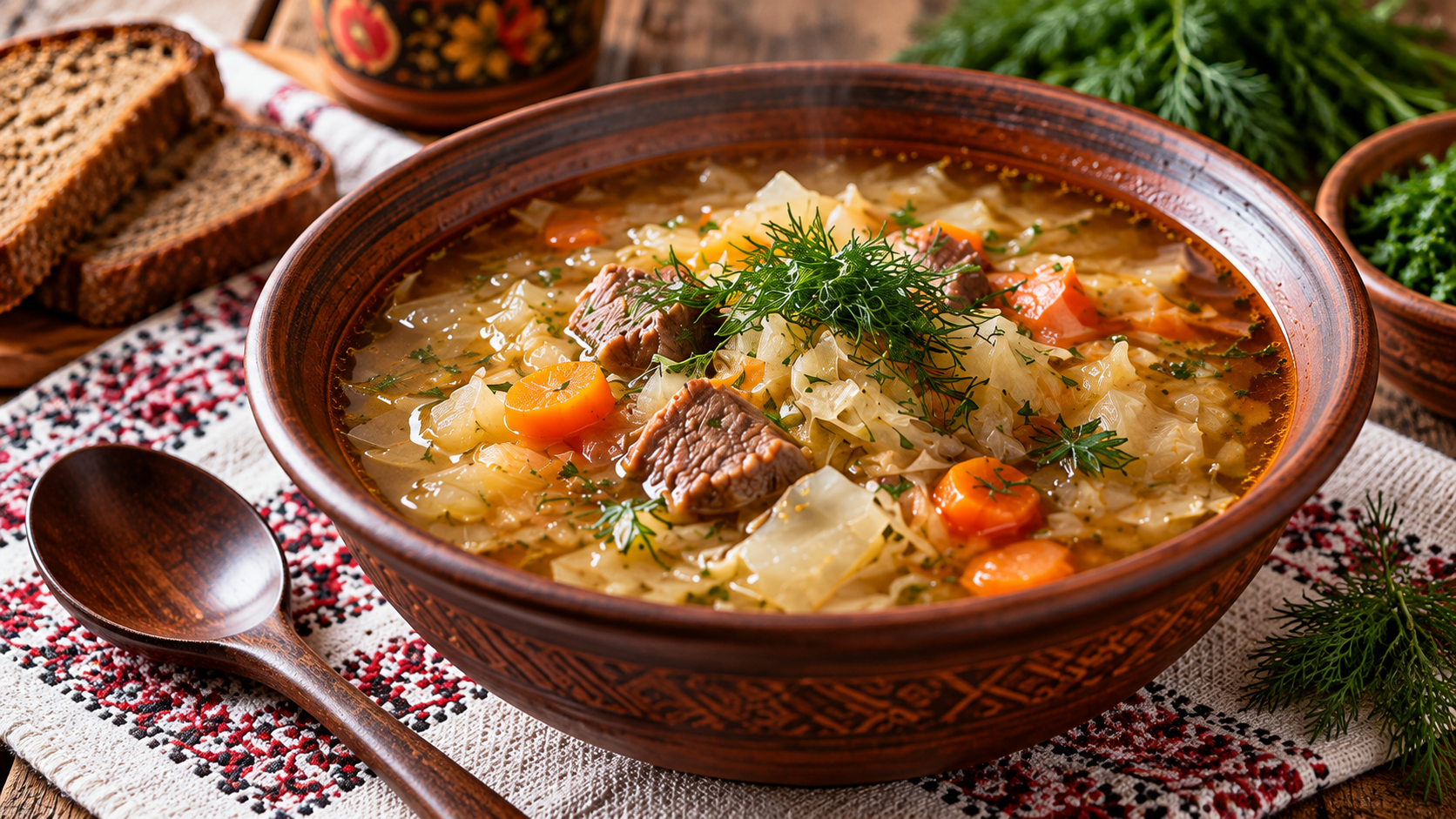
It is generally prepared by simmering ingredients such as pickled cucumbers, onions, and tomatoes in a broth made from meat or fish. Olives, capers, and lemon may also be added, creating a complex flavor in which the characteristics of various ingredients complement one another.
There are several varieties of solyanka, including versions made with meat, fish, and mushrooms.
Meat solyanka often combines beef, sausages, and smoked meats. The umami released from these ingredients creates a particularly rich and satisfying flavor. Fish solyanka, on the other hand, emphasizes the distinctive taste of seafood, while mushroom solyanka offers the characteristic aroma and umami of mushrooms.
Solyanka is also appreciated as a particularly hearty soup in Russian cuisine. Its generous combination of ingredients makes it a satisfying dish for lunch or dinner. It is enjoyed both as a home-cooked meal and as a familiar menu item in restaurants serving Russian cuisine.
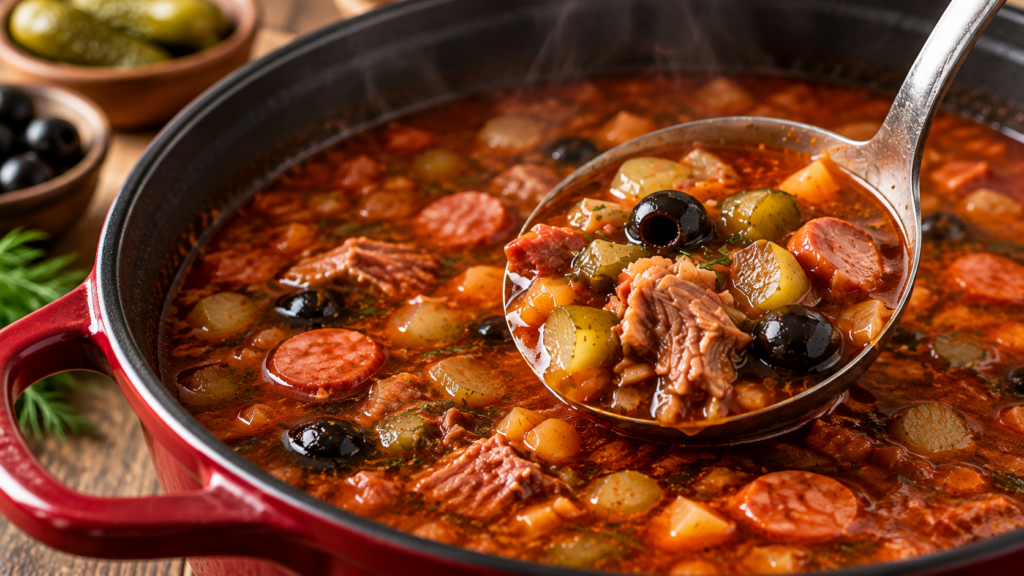
Solyanka is characterized by a rich combination of sourness, saltiness, and umami.
One of the most important ingredients in creating this flavor is pickled cucumber. In Russian, pickled cucumbers are called солёные огурцы́.
These cucumbers have a distinctive salty and sour flavor that adds depth to the soup. In traditional preparation methods, cucumbers are fermented in brine, allowing lactic acid fermentation to produce their characteristic acidity. A small amount of the pickling brine may also be added to enhance the overall flavor of the soup.
Tomato paste and lemon are also sometimes used in solyanka. Tomato paste contributes richness and natural sweetness alongside its acidity, while lemon adds a refreshing aroma. The combination of these ingredients creates the complex flavor characteristic of solyanka.
Meanwhile, broth prepared from meat or fish provides the dish with a rich umami flavor.
For example, meat solyanka may contain a combination of beef, sausages, and smoked meats. Using several types of meat allows their individual flavors to blend into the broth, producing greater depth and richness. Smoked meat, in particular, contributes a distinctive smoky aroma.
Fish solyanka offers a different flavor profile, combining the umami of seafood with the acidity of pickled cucumbers.
In this way, solyanka brings together the sour and salty flavors of preserved ingredients with the umami of meat or fish.
Sour cream (смета́на) may also be added before serving, creating a milder, creamier flavor while preserving the soup’s characteristic acidity.
Solyanka has a long history and developed as part of Russia’s traditional culinary culture.
One particularly interesting aspect of its history is that the dish was also formerly known as selyanka (селя́нка).
The word селя́нка is related to село́, meaning “village,” and its name evokes an association with rural cooking. The modern name соля́нка, on the other hand, is associated with соль, the Russian word for “salt.”
There are several explanations concerning the origins of these names and their relationship to one another. Both names can be found in older Russian cookbooks.
By the late eighteenth century, recipes for selyanka had already appeared in cookbooks. A cookbook published by Nikolai Osipov in 1794 included a dish prepared with ingredients such as fermented cabbage, onions, and ham.
At that time, the names selyanka and solyanka were associated not only with soups resembling the modern dish but also with preparations in which cabbage, meat, and other ingredients were fried or stewed.
During the nineteenth century, solyanka also began appearing in cookbooks as a soup. Various preparation methods using meat, fish, and mushrooms were introduced, expanding the range of dishes associated with the name.
Over time, solyanka became widely appreciated as a rich soup combining pickled cucumbers with meat, fish, and other ingredients. Preparation methods incorporating lemon, olives, and capers also became increasingly familiar.
The development of solyanka is closely connected to Russia’s traditional food preservation practices.
Russia experiences severe winter conditions, and in some regions, fresh vegetables have historically been difficult to obtain for extended periods. As a result, traditional methods of preserving vegetables, mushrooms, and other foods through salting and fermentation became well established.
Typical preserved foods include pickled cucumbers, fermented cabbage, and salted mushrooms.
Fermented cabbage is known in Russian as ква́шеная капу́ста and has long been widely used in Russian home cooking.
These preserved foods have served not only as a means of securing food supplies during winter but also as ingredients that add distinctive flavors to everyday meals. In particular, the acidity produced through lactic acid fermentation has become one of the characteristic flavors of traditional Russian cuisine.
The pickled cucumbers used in solyanka are an ingredient that reflects this culinary tradition.
Traditional Russian pickled cucumbers are prepared by immersing cucumbers in brine and allowing them to ferment with ingredients such as dill and garlic. Cucumbers preserved in this way have traditionally been eaten on their own and used in soups, stews, and other dishes.
Solyanka may also contain preserved ingredients such as smoked meats and salted mushrooms. Incorporating these ingredients into the dish adds the distinctive aromas and umami flavors associated with traditional preservation methods.
Solyanka therefore reflects the practical knowledge developed in Russian households over generations: preserving ingredients in preparation for harsh winters and making effective use of them in everyday cooking.
Solyanka is a traditional Russian dish known for its distinctive sour and salty flavors.
Its main characteristics can be summarized as follows:
Solyanka is a richly flavored dish that developed through the use of traditional Russian ingredients and cooking methods.
By exploring its history and characteristics, we can also gain a deeper understanding of Russian culinary culture and the food preservation practices that developed in response to the country’s cold climate.