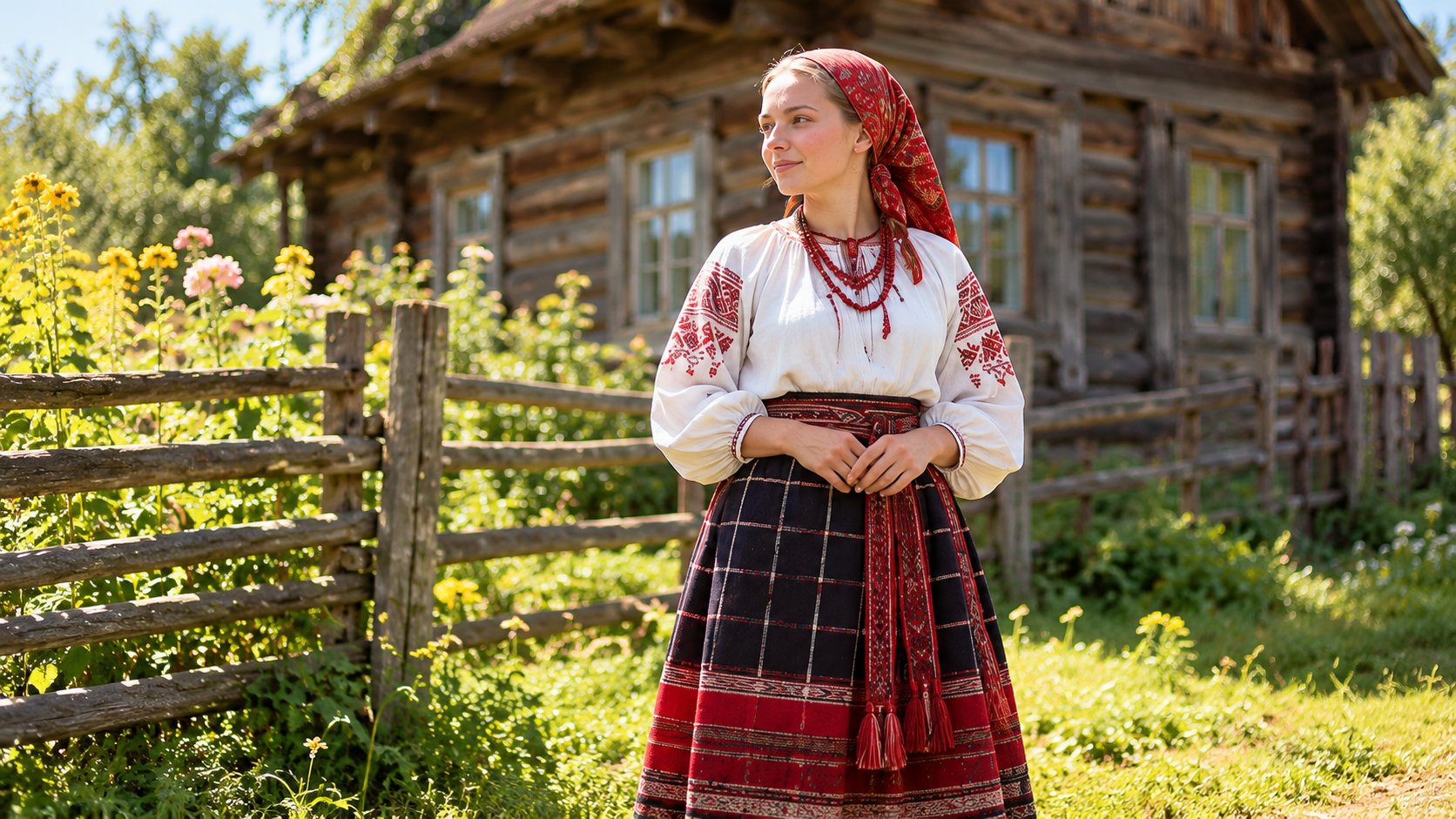
#71 Ponyova | Traditional Skirt Worn by Women in Rural Russia
Yuri Miyajima Russian Forest

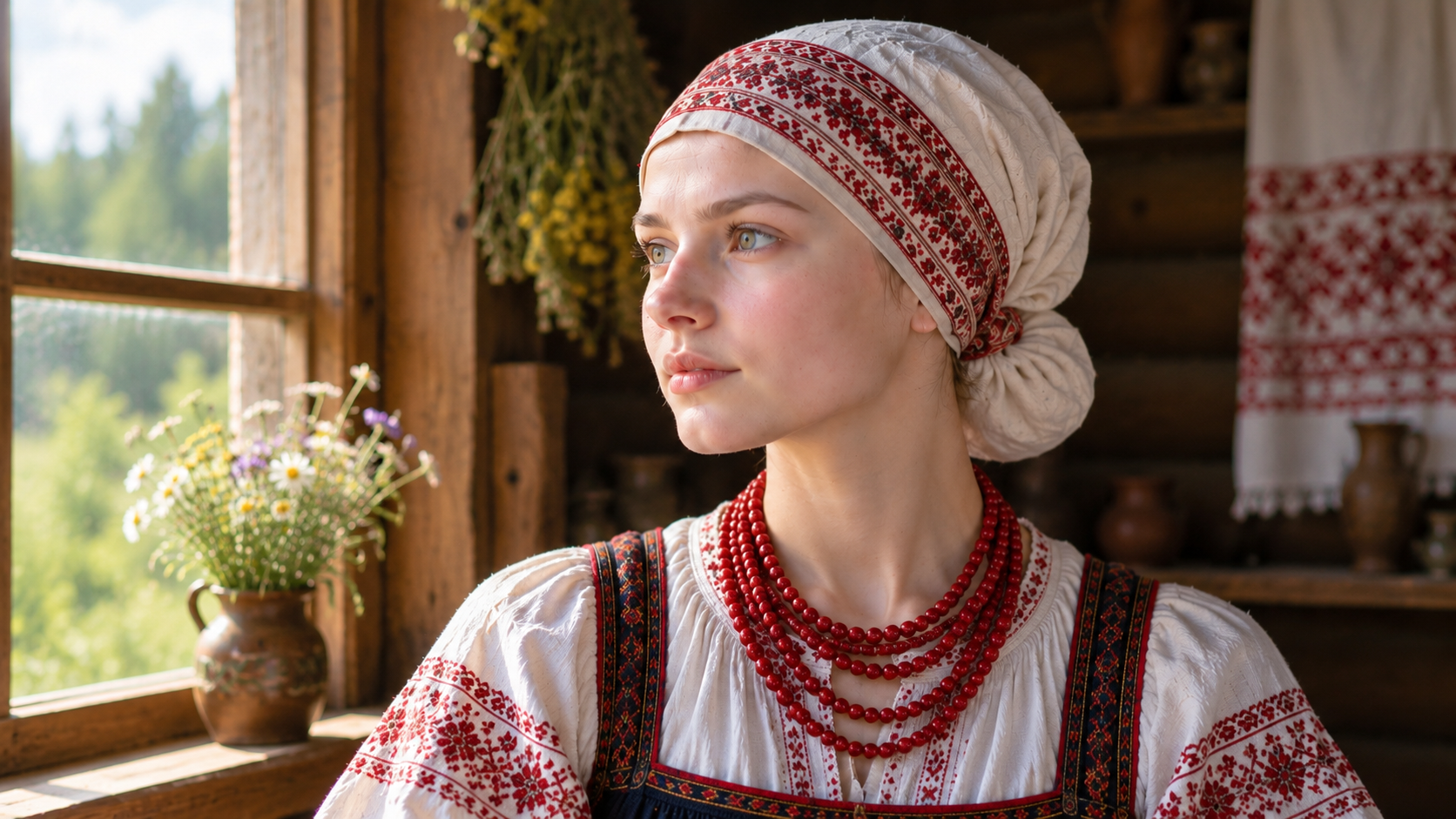
The povoynik (пово́йник) is a traditional cloth headdress worn by married women in Russia. Resembling a close-fitting cap, it was used to gather and cover the hair.
In traditional Russian society, women’s hairstyles and headdresses played an important role in indicating their marital status. In particular, the custom of covering the hair after marriage was widespread, and the povoynik was worn as part of this cultural tradition.
Its shape, materials, and decorations also varied by region, reflecting the diverse traditions of Russian clothing.
In this article, I will explain the main characteristics and history of the povoynik, as well as its connection to marriage.
The povoynik (пово́йник) is a type of traditional Russian women’s headdress. It was worn primarily by married women to gather and cover their hair.
Made of cloth, it had a cap-like shape and was worn close to the head. Some examples had a circular or oval section covering the crown, while others were secured by tightening ties at the back of the head.
The povoynik could be worn on its own or underneath a scarf or a more decorative headdress.
In traditional Russian society, women’s hairstyles and headdresses played an important role in indicating their marital status. Unmarried women sometimes wore their hair in visible braids or adorned their heads with ornaments that left the crown uncovered. Married women, by contrast, commonly gathered their hair and covered it with a headdress or cloth.
Within this tradition, the povoynik served both as a practical part of a married woman’s attire and as an indication of her marital status.
It was particularly common in rural communities, where it was widely used as a practical headdress for everyday life. It became one of the characteristic elements of traditional Russian women’s clothing.
The povoynik is a headdress that was used for many generations in traditional Russian rural culture.
Its history is closely connected to the long-standing custom of married women covering their hair.
In medieval Russia, married women used various types of cloth and headdresses to cover their hair. Among them was the podubrusnik (подубру́сник), a headdress worn underneath a cloth covering the head.
Such headdresses served functions similar to those of the later povoynik and provide insight into the history of clothing traditions associated with covering married women’s hair.
During the eighteenth and nineteenth centuries, the povoynik became widely incorporated into the clothing of rural women across Russia.
In the nineteenth century, alongside styles in which it was worn beneath other headdresses, relatively simple arrangements combining a povoynik with a scarf were also common. It was worn not only in rural communities but also by women living in provincial towns.
From the late nineteenth to the early twentieth century, the combination of a povoynik and a scarf continued to be worn as a married woman’s headdress in certain regions.
Subsequently, as urbanization and the modernization of clothing progressed, the everyday use of traditional headdresses gradually declined.
Today, the history and characteristics of the povoynik can be studied through garments preserved in museums, folk performances, and reconstructions of traditional culture.
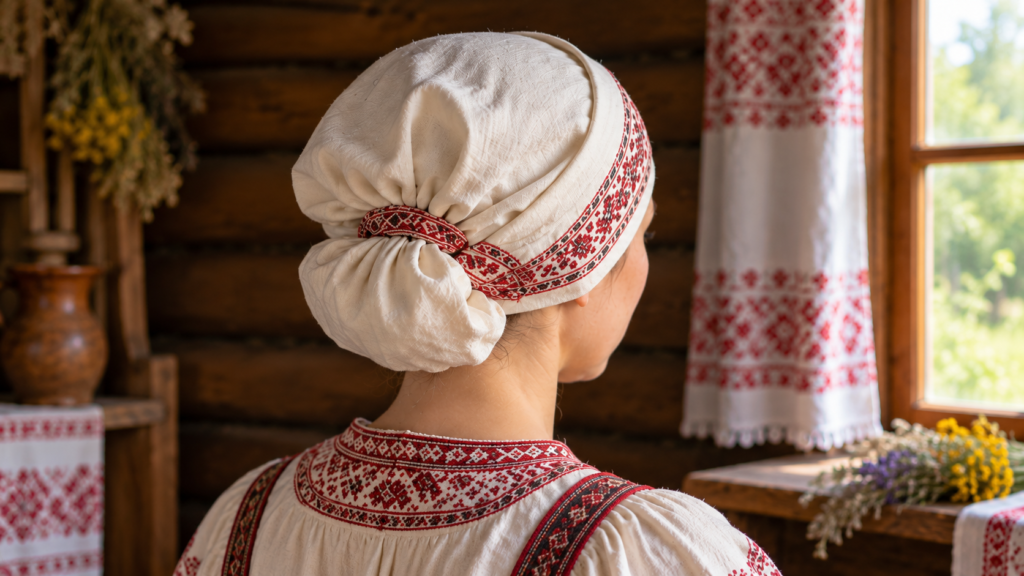
One of the main characteristics of the povoynik is its practical construction, designed to gather and cover a woman’s hair.
A typical povoynik was made by sewing pieces of cloth together to create a cap-like shape that fitted closely around the head.
Many examples consisted of a section covering the crown and another section that secured the headdress around the head. Some also provided additional space at the back to accommodate the hair.
Certain styles could be adjusted to suit the shape of the head and the volume of the hair by gathering the fabric at the back or tightening it with ties.
Materials included linen, cotton, and silk, with variations depending on the region, the wearer’s economic circumstances, and the intended use.
Headdresses intended for everyday wear were generally relatively simple, with an emphasis on durability and ease of use. More decorative examples sometimes featured brightly colored fabrics, embroidery, and ornamental cloth.
The povoynik could also be worn on its own or used as an inner cap beneath a scarf or another type of headdress.
In traditional Russian rural society, women commonly changed their hairstyles and headdresses after marriage.
Unmarried women often wore their hair in a single visible braid, while married women generally divided their hair into two braids, arranged them around the head, and covered them with a headdress.
This distinction helped indicate a woman’s marital status to other members of the community.
In some regions, traditional wedding ceremonies included rituals in which the bride’s hairstyle was changed and she was given a headdress associated with married women. During these ceremonies, the bride’s braid was undone, her hair was rearranged, and her head was covered with a married woman’s headdress.
These actions symbolized the bride’s transition from unmarried to married status and the beginning of her new family life.
After marriage, covering the hair was also regarded as a customary part of everyday life for married women, and the povoynik served as a practical headdress for this purpose.
In some traditional communities, appearing in public with uncovered hair was considered a violation of the social expectations placed on married women.
For this reason, the povoynik was more than a practical item of clothing. It also carried cultural significance, symbolizing the change in a woman’s social position after marriage and the customs associated with married life.
Another well-known traditional Russian women’s headdress is the kokoshnik (коко́шник).
The povoynik and kokoshnik differ in their shapes, materials, and the occasions on which they were worn.
The povoynik is a cap-like headdress made of cloth. It fits closely around the head and primarily serves the practical purpose of gathering and covering the hair.
Everyday examples were commonly made from cotton or linen and were generally relatively simple in construction. More elaborate versions sometimes used fine materials such as silk or velvet and featured embroidery or beadwork.
The kokoshnik, by contrast, is particularly well known as a decorative headdress.
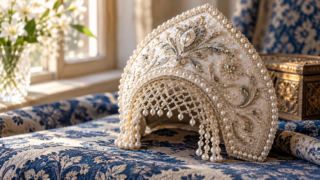
Many examples had a rigid framework made from materials such as cardboard or tree bark. Depending on the region, kokoshniks appeared in various shapes, including tall fan-shaped or crescent-shaped forms rising above the forehead.
Their surfaces were often decorated with gold or silver thread embroidery, pearls, and beads. They were sometimes worn on special occasions, including festivals and weddings.
There were also forms of kokoshnik intended for married women and others intended for unmarried women, with differences in their use depending on regional traditions.
The povoynik was sometimes worn in combination with an outer headdress such as a scarf. Similarly, certain forms of kokoshnik were worn over a cloth covering or cap that concealed the hair.
Thus, the povoynik developed primarily as a practical headdress for covering the hair, while the kokoshnik also served a prominent decorative function.
The differences between these two headdresses illustrate how women in traditional Russian society selected and wore head coverings according to regional customs and the occasions for which they were intended.
The povoynik (пово́йник) is a traditional Russian headdress that married women used to cover their hair.
The most important points are as follows:
The povoynik was essentially a cloth cap that combined practicality in everyday life with a role in indicating marriage and a woman’s social position.
Its regional variations in shape, materials, and decoration also provide valuable insight into the diversity of traditional Russian clothing culture.