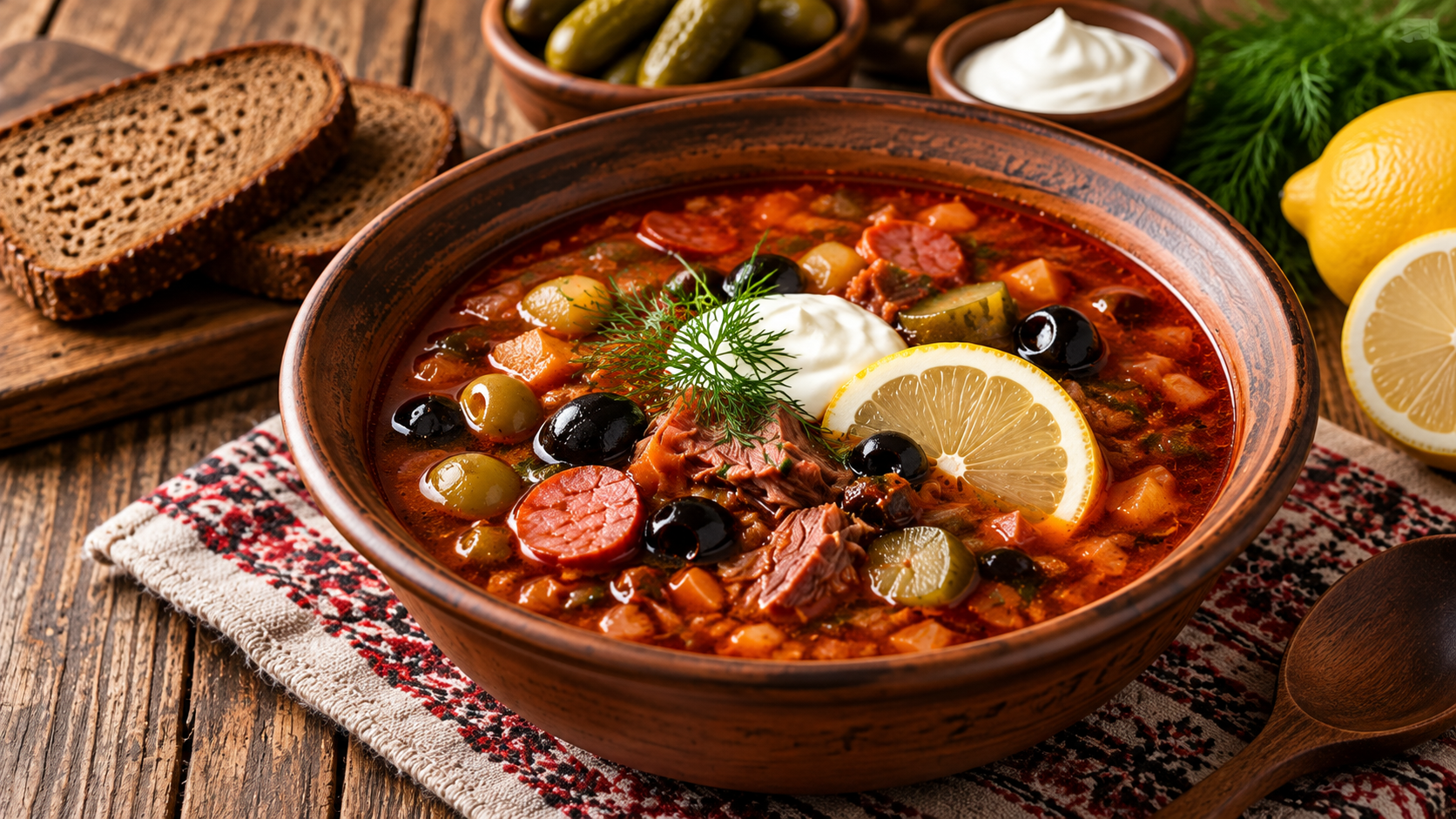
#75 Solyanka | Russian Soup Characterized by Its Sour and Salty Flavors
Yuri Miyajima Russian Forest

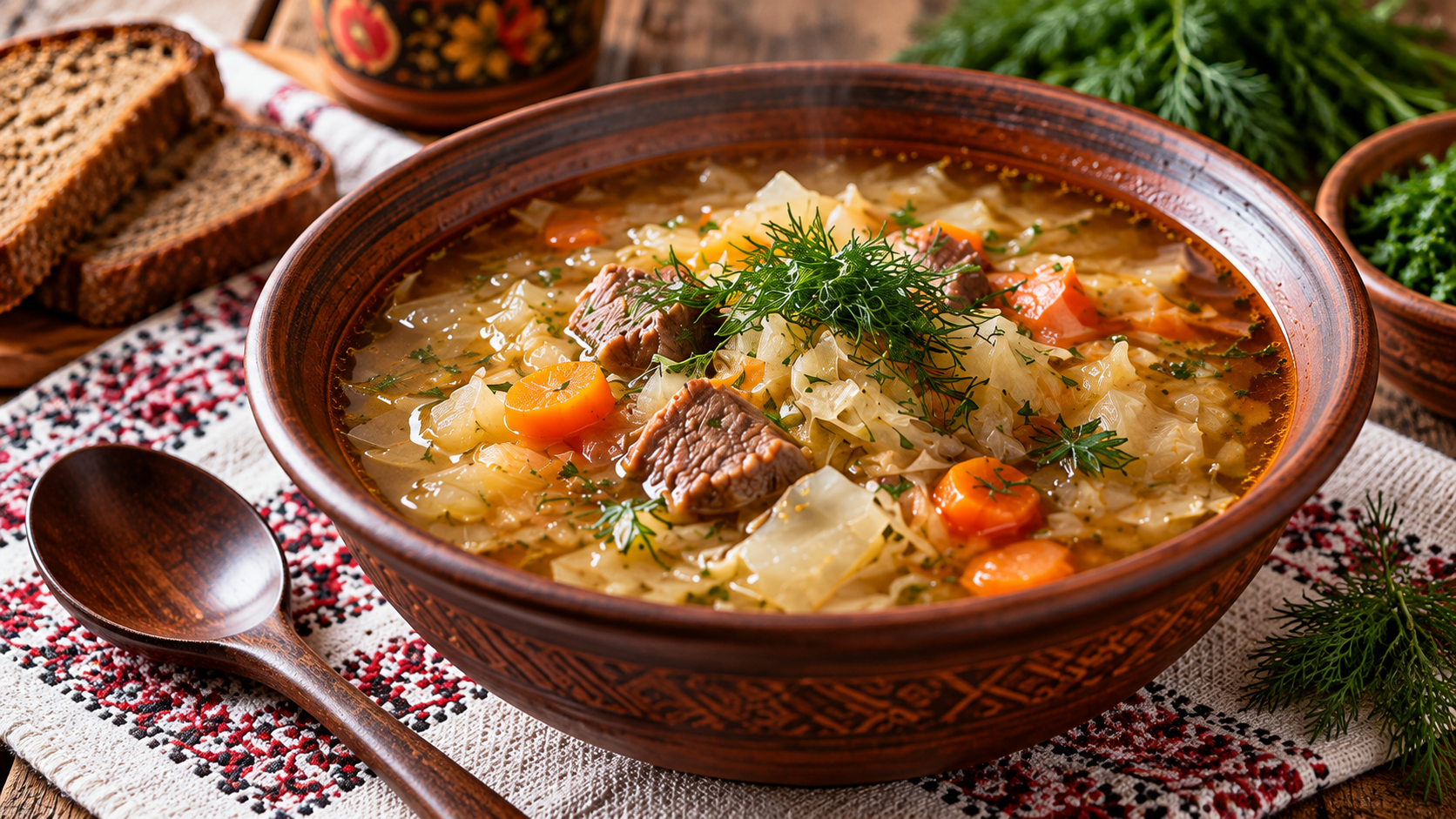
Shchi (щи) is a traditional soup that has been enjoyed in Russia for centuries. Made by simmering cabbage with meat and other vegetables, it is widely recognized as one of the most representative dishes of Russian home cooking.
One of the distinctive characteristics of shchi is its rich flavor, which comes from simple ingredients. Shchi made with fresh cabbage has a mild, delicate taste, while versions prepared with fermented cabbage offer a distinctive sourness.
Shchi is also closely connected to Russian history and everyday life. In Russia, where winters can be extremely cold, warm soups made from readily available vegetables have long been an important part of daily meals.
In this article, I will explore the history, characteristics, main ingredients, varieties, and traditional ways of serving shchi to provide a deeper understanding of Russian culinary culture.
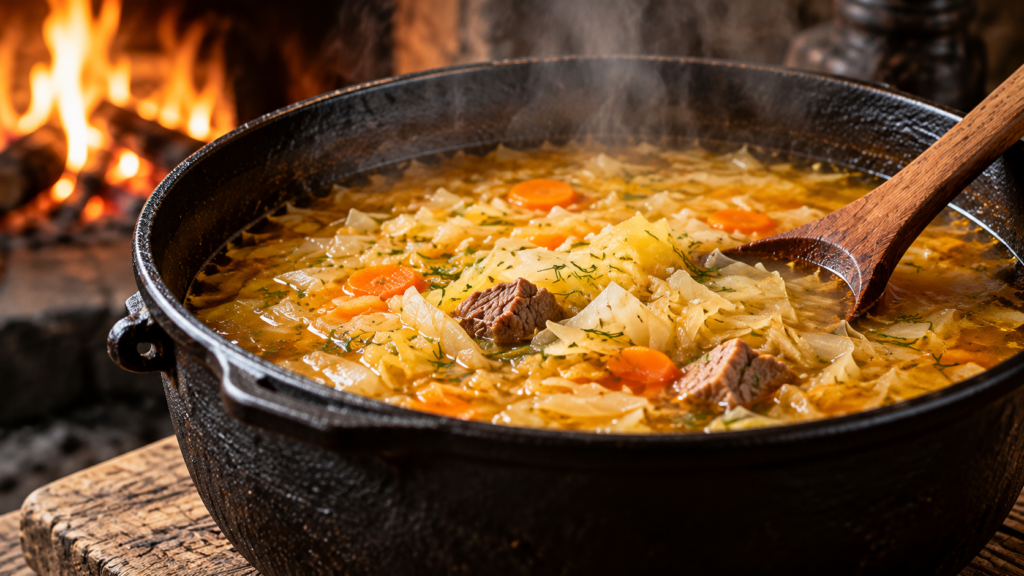
Shchi (щи) is a traditional Russian soup made primarily with cabbage.
Russian cuisine includes a wide variety of soups, but shchi is among those with the longest histories and has been widely prepared in households for centuries. As a familiar dish served at everyday meals, it is regarded as an important part of Russian culinary culture.
Shchi is generally prepared by simmering vegetables such as cabbage, onions, and carrots in a broth made from meat or vegetables. Potatoes, mushrooms, and tomatoes may also be added, and the ingredients and seasonings vary depending on the household and region.
One of the defining characteristics of shchi is its simple yet complex flavor, which highlights the natural taste of cabbage.
When fresh cabbage is used, the result is a mild soup with the natural sweetness of vegetables. When fermented cabbage is used, the soup develops a distinctive sourness and a deeper, richer flavor.
Shchi can also be prepared as a hearty dish containing meat or as a lighter soup based primarily on vegetables. Its adaptability to readily available ingredients is one reason it has remained popular for so long.
In Russia, shchi is generally served hot, sometimes accompanied by smetana (смета́на), a type of sour cream, and fresh herbs. It is also commonly eaten with bread and has become established as a traditional home-cooked dish that brings together the flavors of vegetables and meat in a single bowl.
Although щи refers to a single dish, the word is treated as grammatically plural in Russian. Therefore, to say “This shchi is very delicious,” the following expression is used:
In this sentence, both the demonstrative pronoun э́ти (these) and the adjective вку́сные (delicious) are in the plural form.
Soups made with cabbage and other vegetables have been eaten in Russia since the Middle Ages.
Cabbage is a vegetable that grows relatively well in cold climates and is suitable for preservation. For this reason, it has long been an important ingredient in the Russian diet.
In Russia, where winters are particularly long, preserving harvested vegetables for use during the colder months was essential.
One widely used method was fermenting cabbage to produce ква́шеная капу́ста (sauerkraut or fermented cabbage). Fermentation improves its keeping qualities, allowing cabbage to remain part of the diet even during winter, when fresh vegetables are less readily available.
Shchi made with fermented cabbage consequently became a familiar winter dish in Russian households.
Shchi was also eaten by people from various social classes, ranging from peasants to the nobility.
Wealthier households often prepared hearty versions containing meat and other ingredients, while rural families also enjoyed simpler varieties made primarily with readily available ingredients such as cabbage and mushrooms.
Furthermore, Russian Orthodox traditions include periods of religious fasting during which meat, dairy products, and certain other foods are avoided. As a result, meatless versions of shchi made mainly with vegetables and mushrooms also became popular.
In traditional Russian households, shchi was slowly cooked in clay or iron pots using a Russian masonry stove known as ру́сская печь. The heat retained by the stove allowed the ingredients to simmer gradually, spreading the flavors of cabbage and meat throughout the broth and producing a rich, well-developed taste.
In this way, shchi developed in close connection with Russia’s climate, agriculture, religious customs, and traditional methods of home cooking.
Shchi is prepared using a variety of vegetables, meats, and herbs, with cabbage serving as its main ingredient.
Although the basic ingredients are relatively simple, their natural sweetness, acidity, and savory flavors combine to create a rich and satisfying soup.
The following are some of the most common ingredients, together with their Russian names:
Among these ingredients, cabbage is particularly important.
When fresh cabbage is used, its leaves soften during cooking, releasing their natural sweetness into the broth. When fermented cabbage is used, the acidity produced through lactic acid fermentation becomes a defining feature of the soup.
Onions and carrots also play important roles in balancing the flavor of shchi. Onions become sweeter when cooked, while carrots contribute natural sweetness and color. Adding potatoes makes the soup more filling.
When meat is included, beef or pork is typically simmered to create the base of the broth. The savory flavors released by the meat combine with those of the vegetables, producing a rich and satisfying taste.
Alternatively, mushrooms can be used in place of meat. Mushrooms have a distinctive aroma and savory flavor, adding depth to vegetable-based versions of shchi.
Tomatoes may also be added to provide additional acidity and color. Fresh herbs such as dill and parsley are often used as finishing ingredients, contributing a refreshing aroma.
It is also common to add smetana, a type of sour cream, when serving the soup.
In this way, shchi is a versatile dish that combines familiar ingredients and offers a wide range of flavors depending on the household and region.
Because shchi has long been a familiar part of everyday life in Russia, it also appears in traditional proverbs.
One particularly well-known example is:
In this proverb, да does not have its usual meaning of “yes.” Instead, it functions as a conjunction meaning “and,” connecting two nouns. Although и is the most common Russian conjunction meaning “and,” да is also frequently used in proverbs and traditional expressions.
The word на́ша is a possessive pronoun meaning “our.” It takes the feminine singular form to agree with the feminine noun пи́ща (food, nourishment).
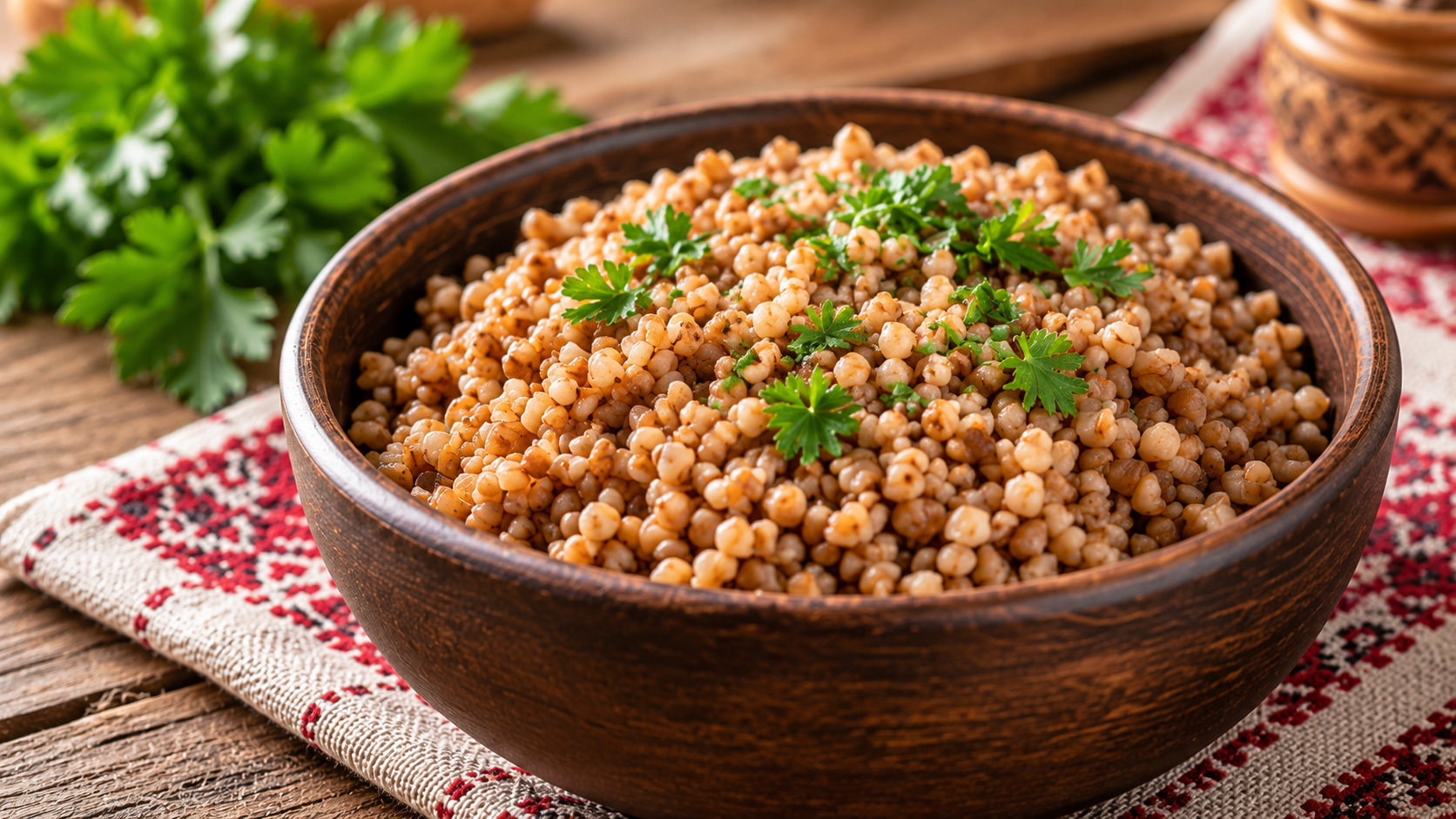
Kasha (ка́ша), which appears in this proverb, is a traditional Russian dish made by cooking grains such as buckwheat, oats, or millet in water or milk. Depending on the grain and preparation method, it may be served as a main dish or a side dish.
Both shchi and kasha can be prepared using relatively accessible ingredients, and they have long formed an important part of everyday meals in Russia.
The proverb Щи да ка́ша — пи́ща на́ша. therefore expresses the idea that shchi and kasha are fundamental dishes that have traditionally sustained the Russian diet.
The expression also contains a rhyme between ка́ша and на́ша, creating a memorable rhythm. Such rhymes and rhythmic patterns are among the characteristic features of Russian proverbs.
The appearance of shchi in this proverb demonstrates that the dish is more than an everyday meal. It has also become a symbol of traditional Russian food culture.
Shchi (щи) is a traditional Russian soup prepared by simmering cabbage with various other ingredients.
It has been enjoyed as a home-cooked dish for centuries, with different varieties made using fresh or fermented cabbage.
Shchi also has a long history closely connected to everyday life in Russia, including the country’s cold climate, food preservation traditions, and traditional cooking methods.
The most important points are as follows:
Shchi is a dish that makes use of familiar ingredients and has been passed down through generations over many centuries.
By learning about its history, traditional ways of serving it, and the proverbs associated with it, we can gain a deeper understanding not only of Russian culinary culture but also of the country’s climate, everyday customs, and the lives of its people as reflected in language.