#35 Russian Youth Slang
Yuri Miyajima Russian Forest

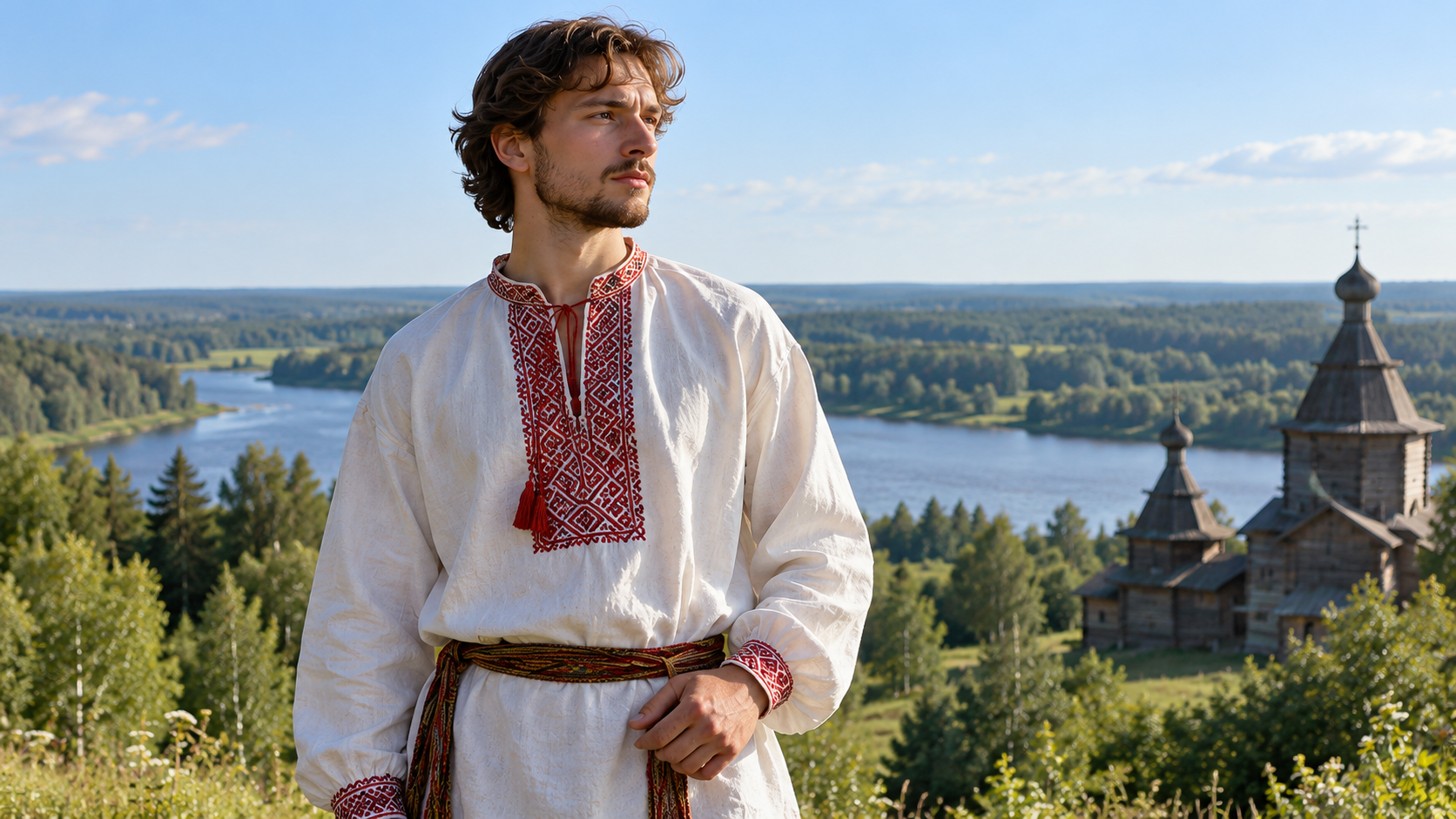
Traditional Russian clothing includes a wide variety of garments characterized by colorful embroidery and distinctive designs.
Among these garments, the rubakha (руба́ха) is a traditional shirt that has been deeply rooted in everyday life in Russia for centuries.
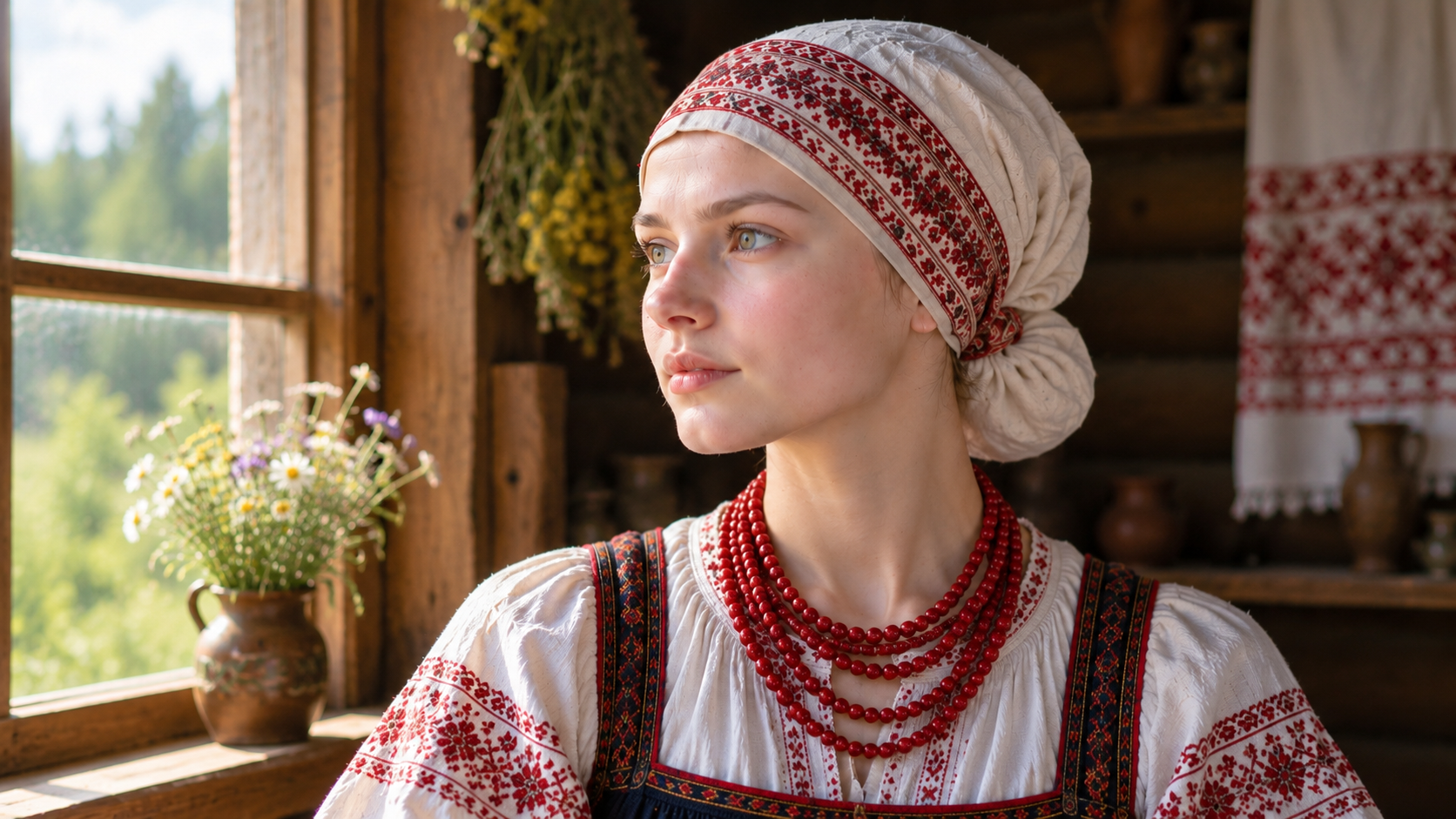
The rubakha is characterized by its loose-fitting design. Men traditionally wore it with trousers and a belt tied around the waist, while women wore it beneath garments such as the sarafan.
Beautiful embroidery was sometimes added around the neckline and cuffs, with patterns and decorations reflecting the traditions of different regions.
In this article, I will explain the characteristics and history of the rubakha, differences between men’s and women’s clothing, the cultural significance of embroidery, and its relationship with Russian culture.
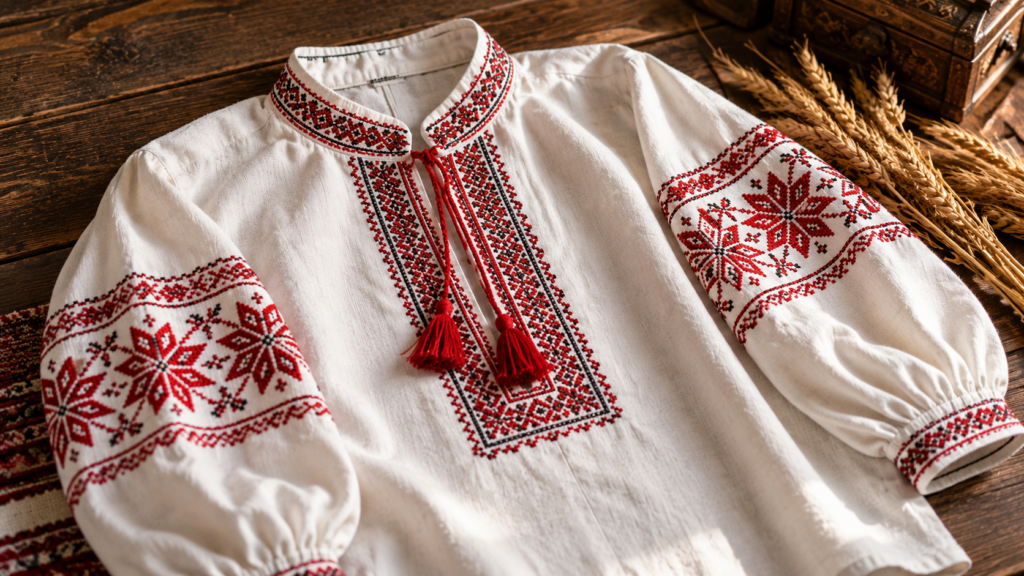
The rubakha (руба́ха) is a traditional shirt that has been worn in Russia since ancient times. It is essentially a garment consisting of fabric covering the torso with sleeves attached, characterized by a loose-fitting design that allows freedom of movement.
Traditional rubakhas were often made by sewing together rectangular pieces of fabric, creating a practical structure that made efficient use of available materials. Some designs also incorporated small pieces of fabric sewn beneath the arms to allow greater freedom of movement.
Long sleeves were common, and an opening was provided at the neckline to allow the garment to be pulled over the head. The length of the shirt, the shape of the neckline, and the construction of the sleeves varied according to region and historical period.
Men’s rubakhas often extended from the waist to approximately the thighs and were worn with trousers. A belt was also tied around the waist to control the looseness of the garment and make movement easier.
Women’s rubakhas, on the other hand, sometimes had longer designs and were worn with garments such as the sarafan (сарафа́н) and poneva (понёва).
Relatively simple rubakhas were generally used for everyday wear, while more elaborate versions decorated with embroidery around the neckline and cuffs were sometimes worn for special occasions, including festivals and weddings.
Thus, the rubakha was both a practical garment that supported everyday life and an essential component of traditional Russian clothing.
In East Slavic societies, shirt-like garments made by sewing pieces of fabric together had been worn since ancient times and formed a fundamental part of clothing for both men and women.
In medieval Rus’, garments corresponding to the rubakha were widely used in everyday life, with differences in materials and decorations reflecting social status and living conditions.
In rural communities, it was common to spin yarn from plant fibers such as flax and make clothing from fabric woven at home. Wealthier individuals, meanwhile, sometimes wore garments made from finer fabrics and decorated with elaborate ornaments.
At the beginning of the eighteenth century, Peter the Great introduced reforms that encouraged the adoption of Western European clothing.
Between 1700 and 1701, decrees requiring Western-style clothing were issued for groups including the nobility and urban residents. As a result, Western-style garments became increasingly common at the imperial court and among the upper classes in cities. In rural communities, however, traditional clothing, including the rubakha, continued to be worn.
During the nineteenth century, the rubakha became one of the most representative garments of Russian peasant clothing. It was worn not only in everyday life but also during festivals, weddings, and religious ceremonies. Rubakhas intended for festive occasions were sometimes decorated with elaborate embroidery around the neckline, cuffs, and shoulders.
Interest in Russian history and folk culture also increased during this period, encouraging the collection and study of traditional clothing.
From the late nineteenth century to the early twentieth century, Western-style clothing gradually became more widespread in cities and rural communities near urban areas. Nevertheless, the traditional rubakha continued to be worn in rural regions.
Embroidery on traditional Russian rubakhas served not only as decoration but also sometimes carried cultural significance.
The neckline, cuffs, and hem were particularly common areas for embroidery. In Russian folk culture, patterns placed around the openings and edges of garments have sometimes been interpreted as expressions of a desire for protection against misfortune and harmful influences.
Traditional embroidery also incorporated various designs inspired by nature and everyday life, including geometric patterns, plants, and birds.
For example, geometric patterns such as diamonds and crosses frequently appear in traditional Russian embroidery.
Diamond-shaped patterns are sometimes associated with the earth and fertility, plant motifs with life and growth, and bird motifs with happiness and good fortune.
The colors used in embroidery also varied by region. Red thread was particularly common in traditional Russian clothing. Red was associated with beauty and festive occasions, and rubakhas decorated with red embroidery on white fabric are widely recognized examples of traditional Russian dress.
Rubakhas worn for festivals and weddings were also sometimes decorated with more elaborate embroidery than everyday garments. In wedding clothing, embroidery added beauty and richness to the garment, helping create an appearance appropriate for the special occasion of marriage.
In this way, embroidery on the rubakha reflects regional aesthetic traditions, cultural values, and the hopes and wishes associated with people’s everyday lives.
The rubakha is a traditional Russian shirt that has been worn for centuries and served as one of the fundamental garments in both men’s and women’s clothing.
The most important points can be summarized as follows:
The rubakha was an important garment in the everyday lives of Russian people and remains a valuable source of information about regional traditions and cultural practices.
By learning about its history and characteristics, we can deepen our understanding not only of traditional Russian clothing but also of the lifestyles and aesthetic sensibilities of the people who wore it.