#86 Valenki | Russian Felt Boots for Winter
Yuri Miyajima Russian Forest

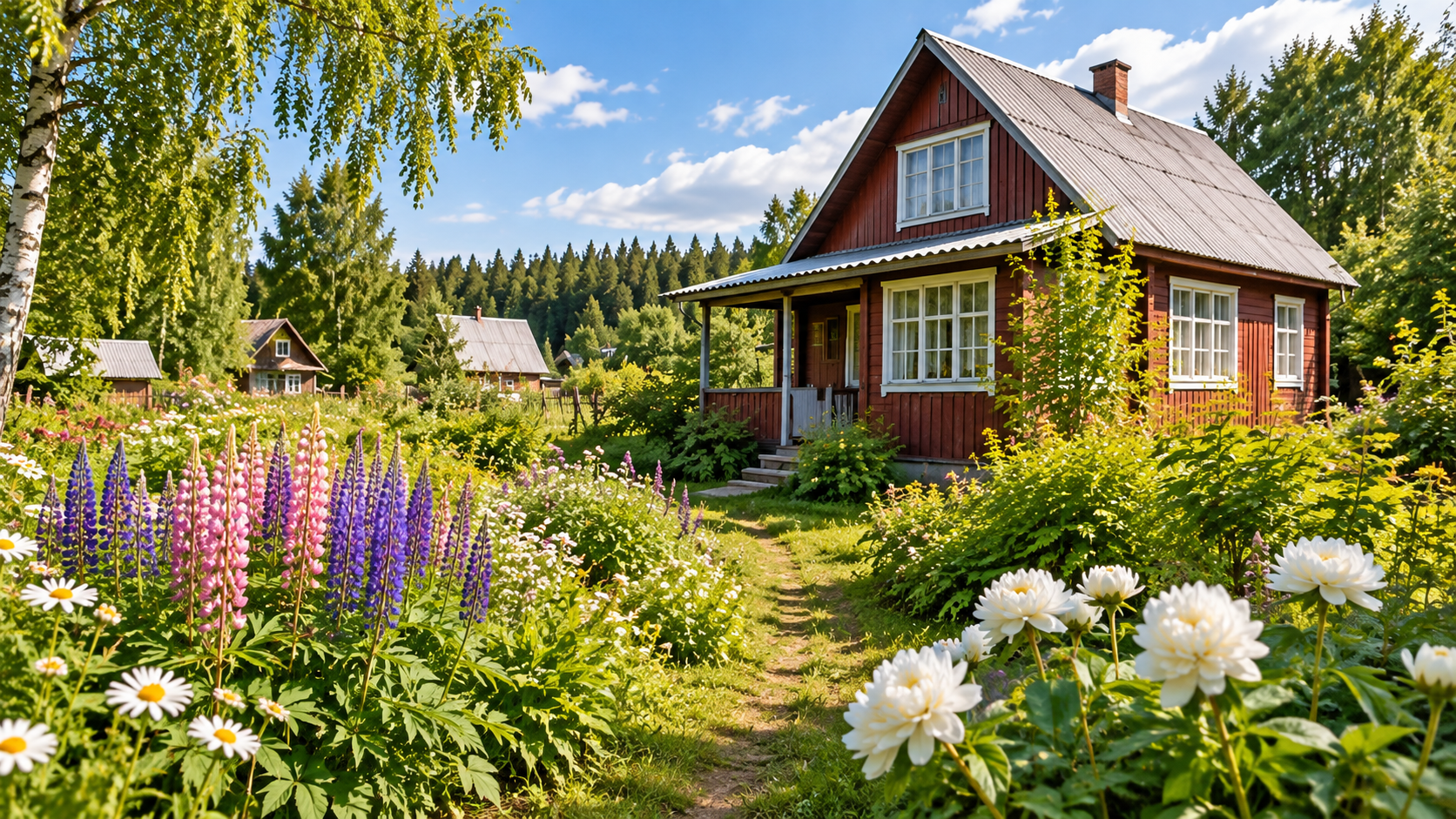
In Russia, there is a tradition of leaving the city on weekends and holidays to spend time surrounded by nature in the countryside. One of the most representative features of this tradition is the dacha (да́ча).
A dacha is a country house or a plot of land located primarily in suburban or rural areas. Dachas have long been a familiar part of Russian life, serving as places where people can relax in nature, grow vegetables and fruit, and spend time with family and friends.
Particularly from spring through autumn, many people leave the cities to visit their dachas. Gardening, harvesting homegrown vegetables, and enjoying meals outdoors are among the activities that characterize seasonal life in Russia.
The dacha also has a history dating back to Imperial Russia. During the Soviet period, it played an important role in supporting the everyday lives of urban residents.
In this article, I will explain the meaning and history of the dacha, typical activities associated with it, and its cultural significance in modern Russia.
A dacha (да́ча) is a country house or a plot of land that is widely associated with suburban life in Russia.
Dachas are generally located in suburban or rural areas away from major cities and are used for weekend visits or extended holidays. Particularly since the Soviet period, it has become common for people in Russia to live primarily in urban apartment buildings while spending their weekends and holidays at a dacha.
One of the main characteristics of a dacha is that it includes outdoor space, such as a garden or vegetable plot, in addition to the house itself. Many properties have vegetable gardens, flower beds, and fruit trees, providing an environment where people can enjoy close contact with nature.
Dacha buildings also vary considerably, ranging from small wooden cottages to well-equipped houses. Some are simple structures used mainly during the summer, while others have heating, running water, and other facilities that make them comfortable even in winter.
From spring through autumn, more people visit their dachas to enjoy gardening and growing vegetables. During the summer, they may share meals outdoors with family and friends, read in the garden, or simply enjoy a change of pace from everyday city life.
In Russian, the following expressions are commonly used when talking about dachas:
In this way, the dacha serves as a familiar living space where people in Russia can relax in nature, enjoy gardening, and spend time with their families.
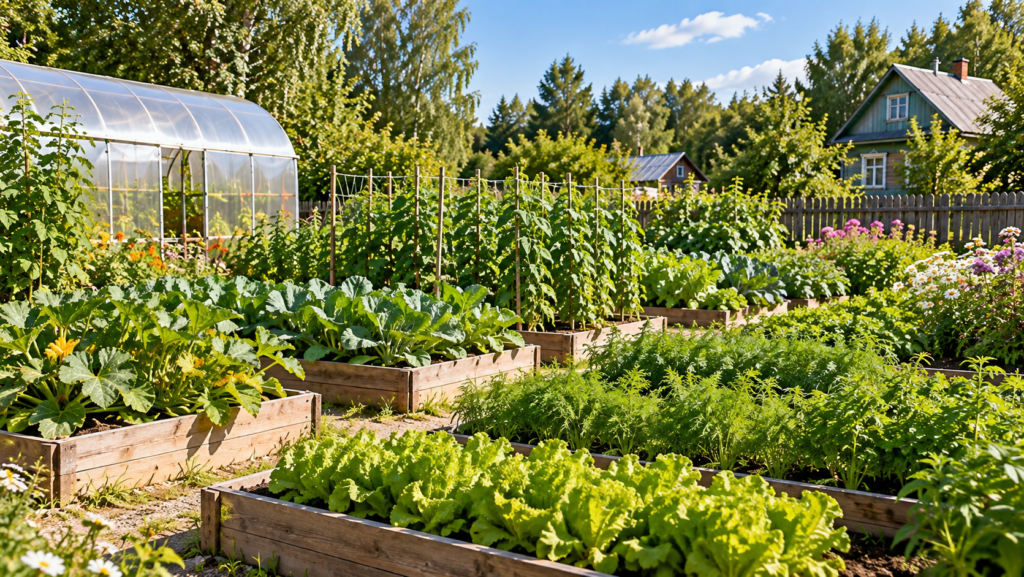
Activities at a dacha vary from household to household, but one of its greatest attractions is the opportunity to spend time at a leisurely pace surrounded by nature.
In spring, people begin tending their gardens and preparing their vegetable plots. They clear away fallen leaves and dead branches left from winter, cultivate the soil, and sow vegetable and flower seeds in preparation for the warmer months. Such gardening activities are one of the seasonal traditions through which people in Russia experience the arrival of spring.
During the summer, people generally spend more time at their dachas. They care for vegetables and fruit trees, read in the garden, drink tea in the shade, and enjoy their leisure time in various ways. The opportunity to escape the heat and noise of urban areas and relax in peaceful surroundings is another attraction of dacha life.
Families and friends may also gather on weekends to enjoy outdoor meals. One particularly popular dish associated with dacha gatherings is shashlik (шашлы́к), which consists of pieces of meat threaded onto skewers and grilled, often over charcoal.
From summer through autumn, the harvest of homegrown vegetables and fruit continues. In autumn, some households harvest potatoes, apples, and other produce in preparation for winter.
In addition to taking their harvests home, people may prepare preserved foods for the colder months. They also begin preparing their dachas for winter by clearing the garden and inspecting the building and its facilities.
In this way, life at a dacha is closely connected to the changing seasons. One of the defining characteristics of dacha culture is the opportunity to enjoy both active pursuits, such as gardening and harvesting, and peaceful moments of relaxation in nature.
The history of the dacha dates back to the period of Imperial Russia.
The word да́ча is derived from the Russian verb дать (to give) and originally referred to land granted by a ruler or another authority.
During the reign of Peter the Great in the eighteenth century, suburban plots of land were granted to nobles and high-ranking officials around the newly established capital of Saint Petersburg. Residences and gardens were developed on these properties, which gradually became places where people could escape the city, relax, and participate in social activities.
At that time, dachas were primarily country residences used by members of the upper classes. During the nineteenth century, however, urban development and changes in lifestyles led to their increasing popularity among the middle classes, including merchants and intellectuals.
In the second half of the nineteenth century, the expansion of railway networks made it easier to travel from cities such as Moscow and Saint Petersburg to surrounding rural areas. As a result, residential communities intended for summer stays developed around major cities, and the practice of renting a dacha for the summer became increasingly widespread.
Dachas also became places where writers, artists, and intellectuals gathered and interacted. Their quiet natural surroundings provided favorable conditions for literary writing and artistic activities, contributing to the development of Russian literature and culture.
In this way, the dacha evolved from a country residence associated with the upper classes into a popular summer retreat for the urban middle classes. Over time, the tradition of relaxing in nature and spending time with family and friends became deeply rooted in Russian life.
Following the Russian Revolution of 1917 and the establishment of the Soviet Union, the systems governing the ownership and use of dachas changed considerably.
During the Soviet period, private ownership of land was generally prohibited, and dacha land was administered by the state or various organizations. As a result, writers, artists, researchers, government officials, and other individuals were sometimes provided with dachas through the organizations to which they belonged.
Meanwhile, the practice of cultivating vegetables and fruit on suburban plots of land also spread among ordinary urban residents.
Particularly from the 1950s onward, following the Second World War, systems for allocating small gardening plots through enterprises, factories, and workplace organizations became increasingly widespread. These plots were known in Russian by terms such as садо́вый уча́сток (garden plot) and were used by urban residents to grow agricultural produce.
During the Soviet period, a plot of approximately 600 square meters became a particularly familiar size for household gardening. The expression “six sotkas” (шесть со́ток) became widely known in Russian, with one sotka (со́тка) representing 100 square meters.
On these plots, people cultivated vegetables such as potatoes, cucumbers, tomatoes, and cabbage, as well as fruit such as apples and berries.
Food supplies were sometimes unstable during the Soviet period, making produce grown in household gardens a valuable contribution to family food supplies and household finances. Traditional practices of preserving harvested vegetables and fruit through pickling, jam-making, and other methods were also maintained as part of dacha life.
Furthermore, for people living in urban apartment buildings, the dacha provided a valuable opportunity to experience nature. Traveling to the countryside with family on weekends and during summer holidays, working in the garden, and enjoying outdoor meals gradually became established seasonal traditions.
Thus, during the Soviet period, the dacha was valued both as a practical place for producing food and as a place where people could escape urban life, relax, and spend time with their families.
These customs continued after the dissolution of the Soviet Union and became an important foundation of dacha culture in modern Russia.
The long-standing popularity of dachas in Russia is closely connected to a way of life that values nature, seasonal changes, and time spent with family.
Many residents of Russia’s major cities live in apartment buildings, making it difficult to have a private garden as part of everyday urban life.
For this reason, a dacha in the countryside offers a valuable opportunity to work with the soil, grow plants, and experience changes in nature firsthand. Time spent listening to birdsong or drinking tea in the garden, away from the noise of the city, also provides an opportunity for physical and mental relaxation.
Russia is also known for its long winters, with severe cold lasting for extended periods in some regions.
Under these climatic conditions, beginning garden work with the arrival of spring, enjoying the summer sunshine, and harvesting crops in autumn provide opportunities to appreciate the changing seasons.
Summer, in particular, is a season when people spend more time at their dachas. Admiring flowers in the garden and harvesting homegrown vegetables are among the traditional ways of enjoying the relatively short summer.
Furthermore, dachas are places where family memories accumulate over generations.
Some families pass down the same dacha from parents to children and eventually to grandchildren, allowing the trees and buildings on the property to become part of the family’s history. Memories of summers spent with grandparents during childhood may inspire people to continue visiting their dachas as adults.
Dachas have also appeared in Russian literature and art.
During the nineteenth century, the practice of urban residents spending the summer in the countryside became increasingly widespread, and literary works began to depict the lives of people staying at dachas.
For example, some works by Anton Chekhov portray the everyday lives and personal relationships of people spending time at dachas. Such works provide insight into how familiar dacha culture had become in Russian society by the second half of the nineteenth century.
These literary depictions also demonstrate how deeply the dacha had become integrated into everyday life in Russian society.
In this way, the dacha has practical functions as a residence and garden while also being closely associated with nature, family, seasonal traditions, and cultural memories.
For many people in Russia, the dacha remains an important place where they can escape urban life, enjoy time at their own pace, and create lasting memories with their families.
The dacha is a long-established tradition of country-house living in Russia.
During the period of Imperial Russia, dachas became popular among the nobility and the urban middle classes. In the Soviet period, they also played an important role in supporting the food supplies of urban households through small-scale gardening.
Today, dachas are used for various purposes, including relaxing in nature, enjoying gardening as a hobby, and spending time with family and friends.
The most important points can be summarized as follows:
In this way, the dacha has become an enduring part of Russian culture, enriching everyday life through contact with nature and opportunities to spend time with family.