#78 Kasha | Grain Dish at the Heart of Russian Cuisine
Yuri Miyajima Russian Forest

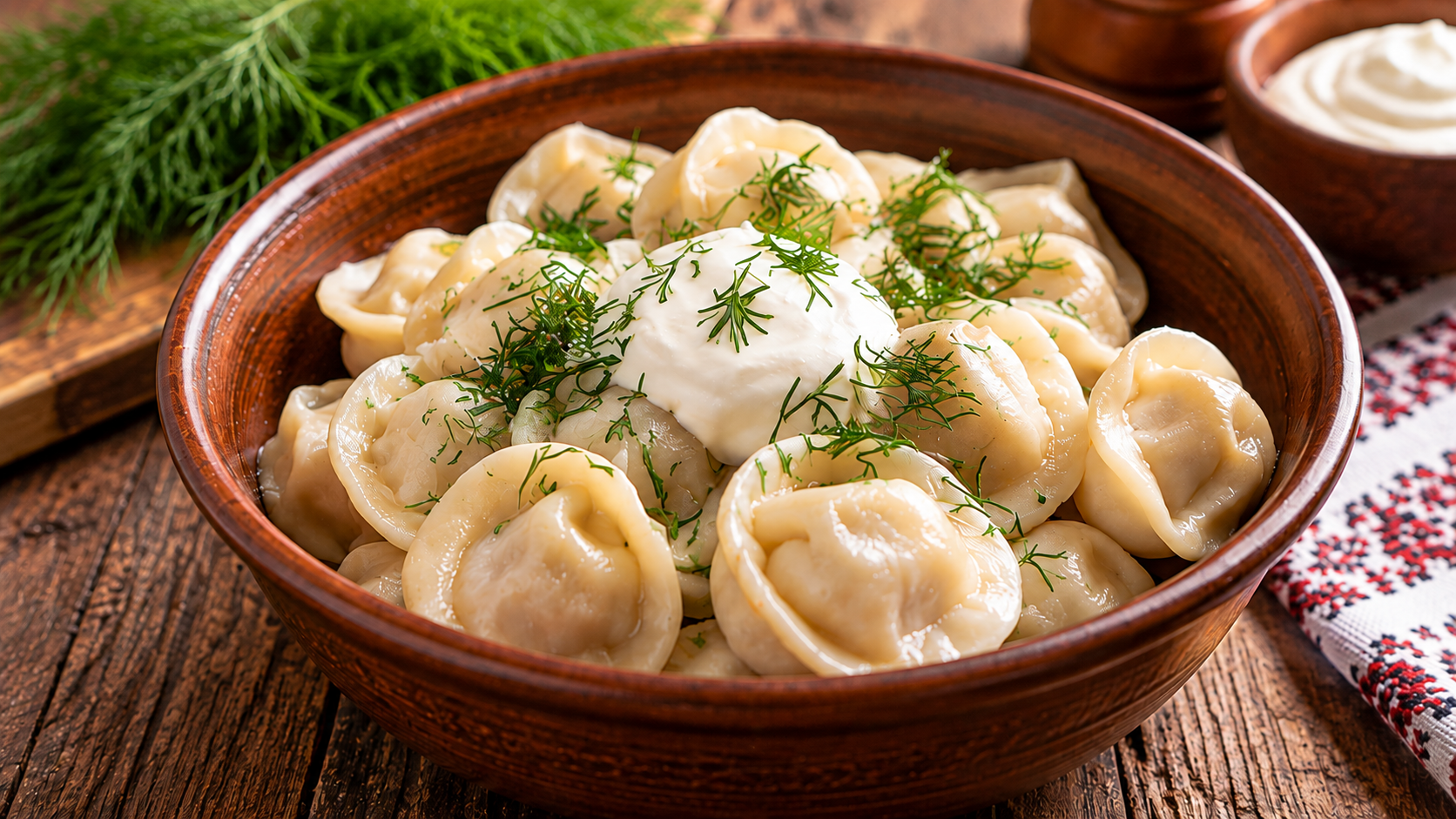
Russia has a wide variety of traditional dishes that have developed in close connection with its harsh winters and regional natural environments. Among these dishes, pelmeni (пельме́ни) are particularly popular as a traditional home-cooked meal.
Pelmeni are dumplings made by wrapping minced meat and other ingredients in thin wheat-flour dough and boiling them in water.
In particularly cold regions, there has long been a tradition of preparing large quantities of pelmeni during winter and storing them frozen. They have therefore played an important role as preserved food that can be prepared quickly and conveniently.
The history of pelmeni is also closely connected not only with Russian food culture but also with the history of Siberia and cultural exchanges with neighboring regions.
In this article, I will explain the history and characteristics of pelmeni, their traditional preparation methods, how they are commonly eaten, and their relationship with everyday life in Russia.
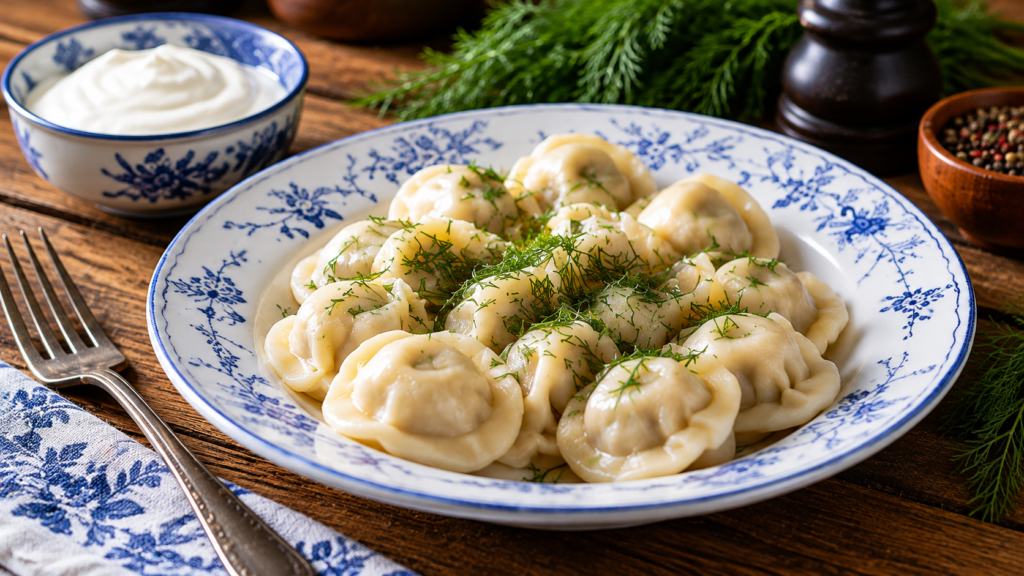
Pelmeni (пельме́ни) are a traditional Russian dish consisting of meat filling wrapped in thinly rolled wheat-flour dough and cooked in boiling water.
The filling is typically prepared using minced pork, beef, or lamb, combined with finely chopped onions, salt, and pepper. A mixture of beef and pork is particularly common, giving pelmeni a juicy flavor that highlights the richness of the meat.
The dough is made from ingredients such as wheat flour, water, eggs, and salt. It is rolled thinly and cut into small circles. A portion of filling is placed in the center of each circle, and the dough is folded into a semicircle. The two ends are then joined together to create the distinctive shape of pelmeni.
This rounded shape is one of the defining characteristics of pelmeni. Sealing the edges of the dough firmly also prevents the filling from escaping during cooking and helps retain the meat juices.
Pelmeni are usually boiled in water or broth and served with butter or sour cream known as smetana (смета́на).
In Russian, the word is written as follows:
The plural form пельме́ни is generally used when referring to the dish as a whole.
In Russia, pelmeni are both a traditional homemade dish and a convenient everyday meal.
Thus, pelmeni are one of Russia’s representative dishes, deeply rooted in both traditional food culture and modern eating habits.
The origins of pelmeni are closely associated with the food cultures of the Ural and Siberian regions of Russia.
In particular, the culinary traditions of Finno-Ugric peoples, including the Komi and Udmurt peoples who have long inhabited the Ural region, are believed to have influenced the development of modern pelmeni.
The name “pelmeni” is also thought to have originated from a Finno-Ugric language.
For example, the Udmurt word пельнянь consists of пель, meaning “ear,” and нянь, meaning “bread.”
The word therefore means “ear-shaped bread,” a name believed to refer to the distinctive shape of pelmeni.
The spread of pelmeni among Russians was also connected with Russian expansion into the Ural and Siberian regions.
From the late sixteenth century onward, Russian expansion into Siberia intensified, leading to increased contact with local populations. These regional interactions are believed to have contributed to the spread of dishes such as pelmeni among Russians.
Pelmeni were also well suited to life in cold regions and to long-distance travel because they could be prepared in large quantities and stored frozen.
Over time, they gradually spread through regional trade and population movements. By the nineteenth century, pelmeni had begun appearing in culinary literature and were becoming known beyond the Ural and Siberian regions.
Across Eurasia, many dishes involve wrapping meat in dough, including Chinese dumplings and Central Asian manti.
It has also been suggested that cultural exchanges with neighboring regions may have influenced the development of pelmeni.
The popularity of pelmeni in Siberia is closely connected with the region’s cold climate and harsh natural environment.
During winter, temperatures in Siberia fall well below freezing and can drop below −30°C in some areas. For this reason, natural cold has long been used to preserve food.
Pelmeni are one of the dishes particularly well suited to these conditions.
Traditionally, families would prepare large quantities of pelmeni during winter, freeze them outdoors using the natural cold, and cook only the amount needed for each meal.
Frozen pelmeni can be placed directly into boiling water without thawing. Because they can be frozen as individual dumplings, it is also easy to take out the required quantity or transport them in cold conditions.
These characteristics made pelmeni valuable not only as preserved food for households but also as provisions for winter hunting and long-distance journeys.
Furthermore, pelmeni are made primarily from meat and wheat flour, making them a substantial dish that provides energy and the satisfaction of a warm meal.
For people living through Siberia’s long winters, pelmeni were a convenient food that could be stored easily and prepared whenever needed, making them a practical part of everyday life.
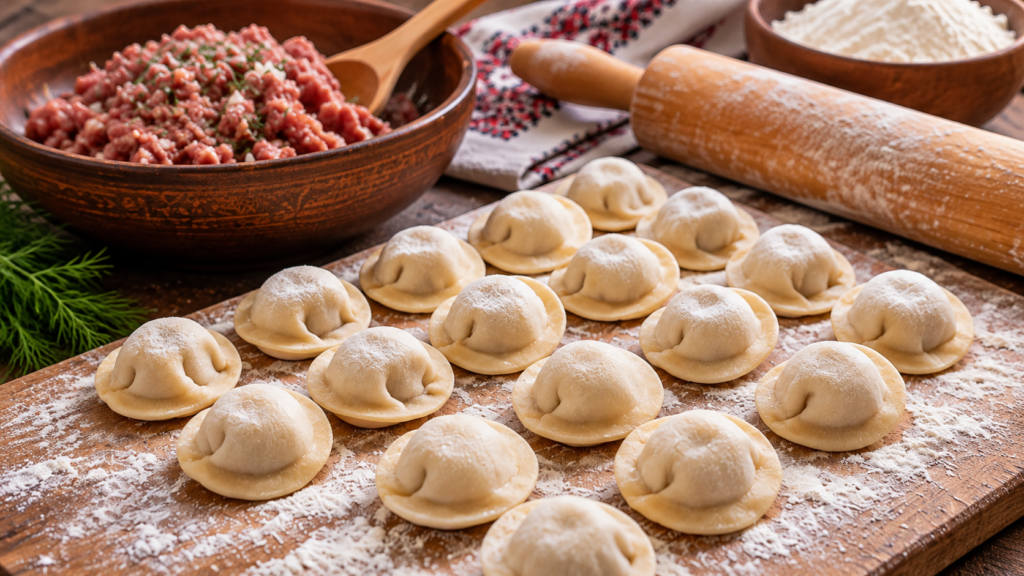
The basic ingredients of pelmeni can be divided into two main components: the dough and the meat filling.
The dough is made using wheat flour, water, eggs, and salt. These ingredients are combined and kneaded thoroughly to produce an elastic dough that can be rolled thinly without tearing.
The filling is generally made from minced beef or pork mixed with finely chopped onions, salt, and pepper. A combination of beef and pork is common, although lamb is also used in some regions and households.
The basic preparation method is as follows:
When preparing pelmeni, the thickness of the dough and the amount of filling are particularly important.
Rolling the dough thinly produces a tender texture after cooking. Using an appropriate amount of filling and sealing the edges firmly also helps prevent the filling from escaping during boiling.
Some recipes also involve adding a small amount of cold water to the meat filling to produce juicier dumplings that retain more liquid after cooking.
In Russia, pelmeni may be shaped individually by hand or prepared using a special mold called a pelmennitsa (пельме́нница). This mold makes it possible to produce many pelmeni efficiently at once.
Once prepared, pelmeni can be boiled immediately or frozen for later use.
In this way, pelmeni are a practical dish that can be made from familiar ingredients and are particularly suitable for preparation and storage in large quantities.
Pelmeni are generally eaten while still warm, shortly after boiling.
In Russia, they may be eaten on their own, served with butter or sour cream, or enjoyed together with broth.
Some of the most common accompaniments and serving methods include the following:
Smetana, in particular, is a dairy product commonly found on Russian dining tables. Its creamy texture and slightly sour flavor complement the rich meat filling of pelmeni, making it a standard accompaniment in both homes and dining establishments.
When pelmeni are served with broth, the cooked dumplings are placed in a bowl and covered with warm meat broth or another type of stock.
Depending on the household, chopped herbs such as dill (укро́п) or parsley (петру́шка) may also be added.
Pelmeni are one of Russia’s most representative traditional home-cooked dishes.
They consist of meat filling wrapped in wheat-flour dough and boiled in water. Their history is closely connected with the food cultures of the Ural and Siberian regions.
In cold regions, people traditionally used the natural winter temperatures to freeze and preserve pelmeni, making them useful both as household provisions and as food for travel.
The most important points are summarized below:
Pelmeni are also an interesting dish through which to explore Russian history, climate, and family life.
When studying Russian, learning about the cultural traditions and everyday practices associated with dishes such as pelmeni, alongside the names of foods and ingredients, can help deepen your understanding of Russia.