#29 The Relationship Between Kazakhstan and the Russian Language
Yuri Miyajima Russian Forest
When people think of Russia, they may imagine it simply as a country inhabited by Russians. In reality, however, Russia is not a country made up of only one ethnic group.
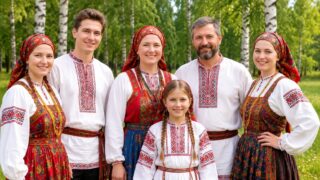
More than 190 ethnic groups and peoples live in the Russian Federation, each of which has preserved its own culture and traditions. In addition to Russian, many ethnic minority languages are spoken throughout the country. For this reason, Russia is known as one of the most ethnically diverse countries in the world.
In this article, I will introduce the characteristics of Russia as a multiethnic state and explain the role that the Russian language plays within it.
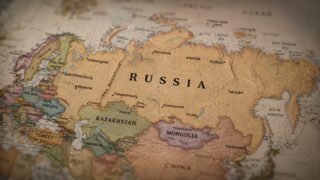
Russia is the largest country in the world, with a total area of approximately 17.1 million square kilometres.
Its vast territory extends from Eastern Europe to northern Asia and contains a wide variety of natural environments and regional communities. More than 190 ethnic groups and peoples live across the country, and the languages, cultures, and traditions that they have inherited differ considerably according to ethnicity and region.
The following are some examples of ethnic groups living in Russia:
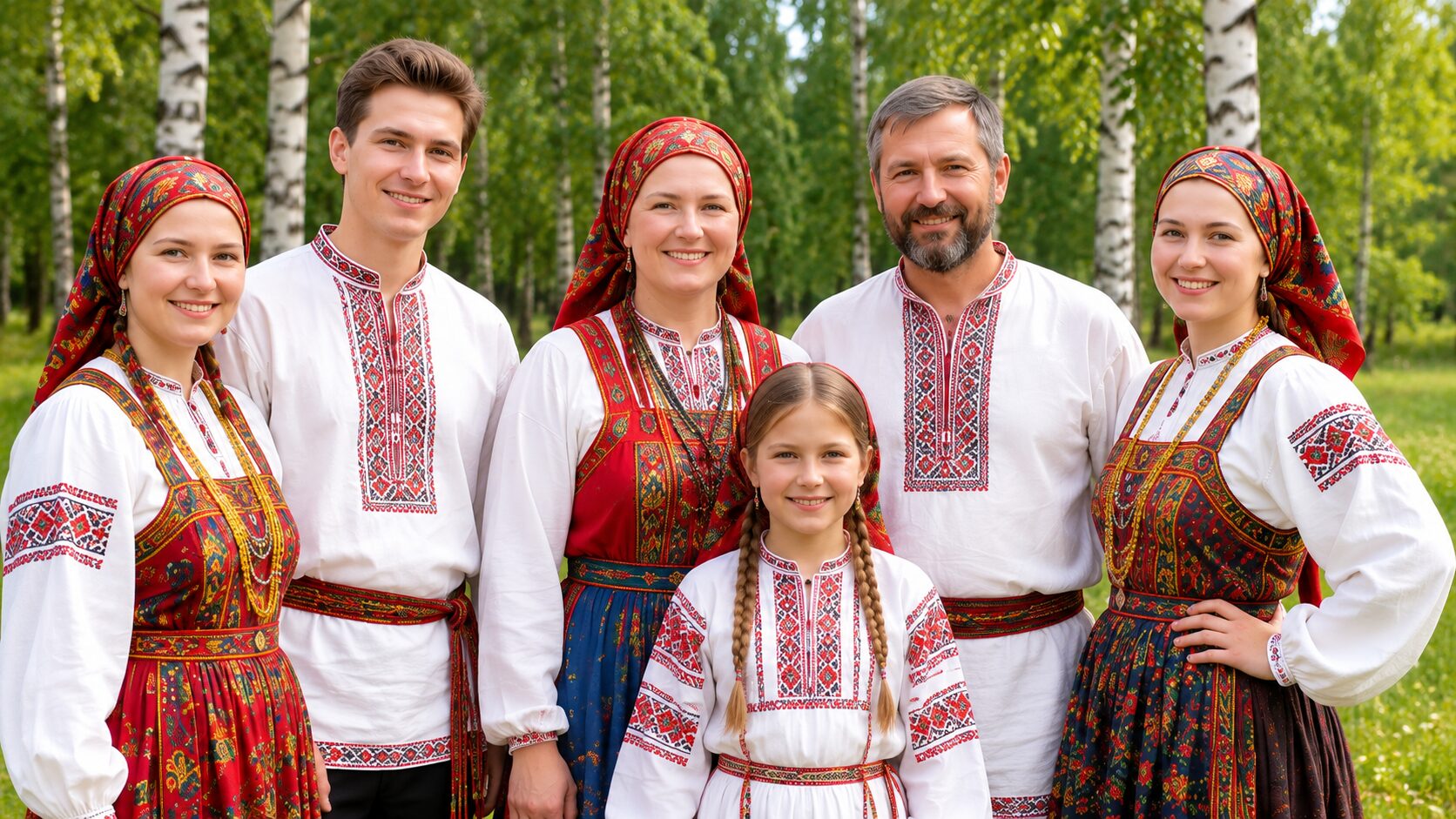
These peoples live mainly in different regions, including European Russia, the Volga region, the area surrounding the Ural Mountains, Siberia, the Russian Far East, and the North Caucasus. Their languages, traditional cultures, ethnic clothing, music, and cuisine vary greatly.
For example, many Turkic peoples, including the Tatars and Bashkirs, live in the Volga region. The North Caucasus is home to a wide variety of ethnic groups, including the Chechens and Avars. In Siberia and the Russian Far East, there are peoples who have preserved Turkic, Mongolic, and Tungusic languages, as well as Indigenous peoples of the Russian North.
Russia is therefore not simply a geographically vast country. Because of its position across both Europe and Asia, as well as the historical process through which it formed an extensive territory, it has become one of the most ethnically diverse countries in the world.
The presence of so many ethnic groups in Russia is closely connected to the country’s long history of territorial expansion.
The states that eventually developed into modern Russia did not originally possess such an extensive territory. In the late medieval period, the Grand Duchy of Moscow increased its power and began expanding into surrounding regions from the late 15th century through the 16th century.
A particularly important turning point occurred in 1552, when Ivan IV, also known as Ivan the Terrible, conquered the Khanate of Kazan. Following this conquest, various peoples and regions of the Volga area, including the Tatars, Chuvash, and Mari, were gradually incorporated into the Russian state.
Russia subsequently expanded into Siberia and later extended its territory into the Caucasus and the Russian Far East. During this process, peoples with different languages and cultures, including the Sakha, Buryats, Evenks, and Chechens, came to live within Russian territory.
As the Russian Empire expanded during the 18th and 19th centuries, its multiethnic character became even more pronounced. Across its vast territory, stretching from Europe to Asia, numerous peoples with different religions, cultures, and ways of life came to coexist.
After the Russian Empire collapsed following the Russian Revolution of 1917, the Soviet Union was established in 1922 after a period of civil war and political upheaval. Following the dissolution of the Soviet Union, the Russian Federation was established in 1991.
Although political systems and national borders changed considerably, Russia’s character as a multiethnic state has continued to the present day.
In Russia, where more than 190 ethnic groups and peoples live, many ethnic minority languages are spoken alongside Russian.
However, these languages do not all belong to the same language family as Russian.
For example, Tatar and Bashkir belong to the Turkic language family, Komi belongs to the Uralic language family, and Buryat belongs to the Mongolic language family. Russian, by contrast, belongs to the Slavic branch of the Indo-European language family.
Some of the regions that make up the Russian Federation are known as republics and possess a relatively high degree of autonomy. In many of these republics, a regional ethnic language is designated as a state language alongside Russian. For example, Russian and Tatar are used as official languages in the Republic of Tatarstan, while Russian and Sakha are used as official languages in the Sakha Republic, also known as Yakutia.
Russian is the main language used in school education, but depending on the region and the school, students may also have opportunities to study an ethnic minority language as a subject. However, the availability of such education and the extent to which these languages are used vary from region to region.
Russian and regional ethnic languages may also appear together in government offices, on road signs, and in public facilities.
In a country where numerous ethnic groups live and many different languages are spoken, a common language is necessary to enable communication between people from different regions and ethnic backgrounds.
For this reason, Russian plays an important role as a lingua franca connecting the various peoples of the country.
Russian is the official language throughout the Russian Federation. It is used in many areas of society, including government administration, law, education, the military, television, newspapers, and business.
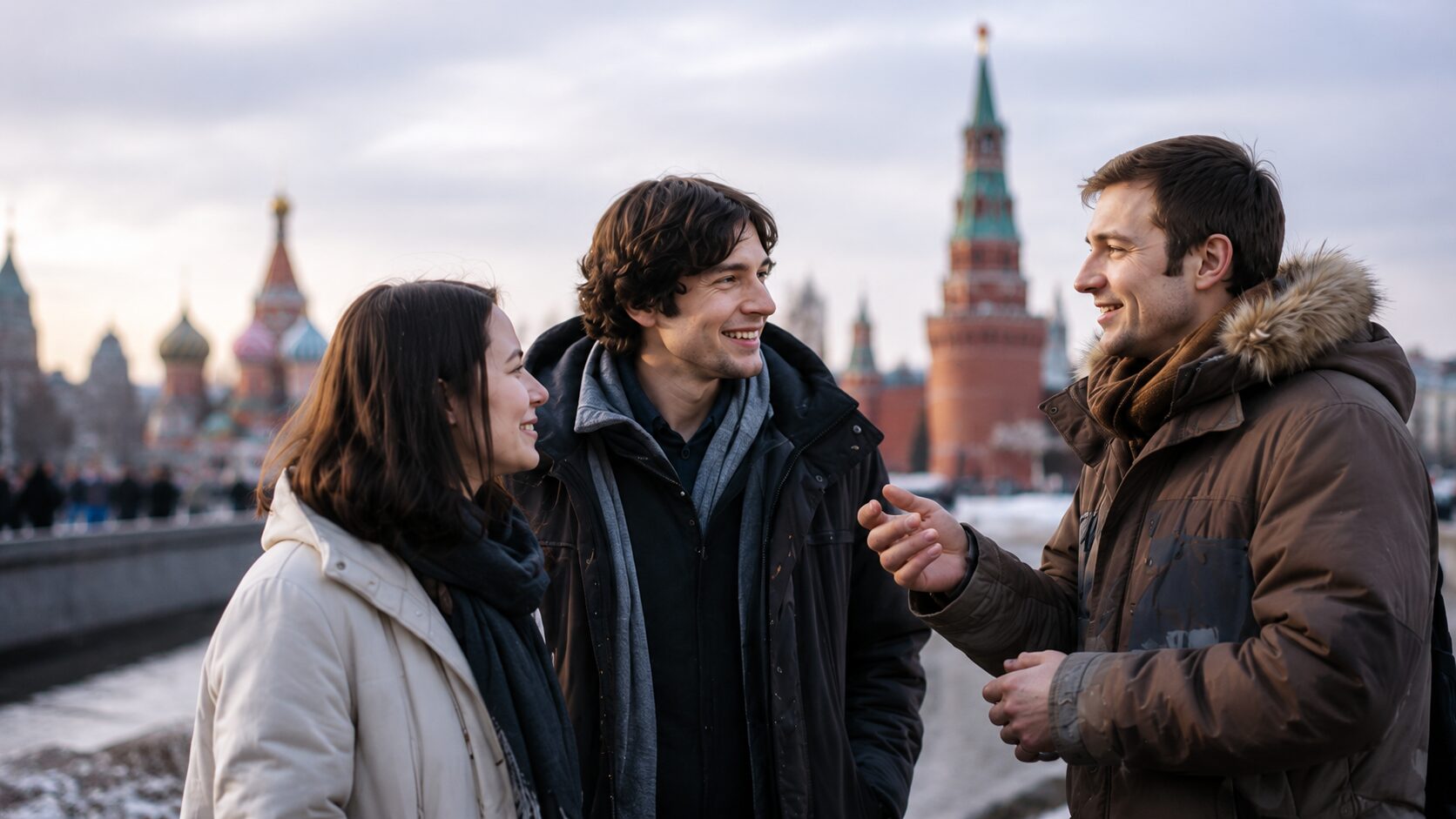
For example, when a Tatar from the Republic of Tatarstan and a Sakha person from the Sakha Republic communicate for work or while travelling, they will generally speak Russian rather than each other’s ethnic languages. In this way, Russian functions as a shared language that connects people across ethnic and regional boundaries.
Ethnic minority languages are also taught in schools in many republics, while Russian-language education is provided at the same time. As a result, some people use both an ethnic language and Russian, depending on the region, family, or situation.
For different individuals, Russian may function as a native language, a second language, or a common language used to communicate with people from other ethnic groups.
In this way, Russian plays a major role as a bridge connecting the many peoples who live within a single state.
Russia is one of the world’s most multiethnic countries, with more than 190 ethnic groups and peoples living within its borders.
The main characteristics of Russia as a multiethnic state can be summarized as follows:
Russia is not a country made up solely of one ethnic group known as the Russians.
Rather, it is a society that encompasses a wide range of peoples, languages, and cultures.