#29 The Relationship Between Kazakhstan and the Russian Language
Yuri Miyajima Russian Forest

Around the world, there are linguistic regions in which a single language is used across multiple countries and territories, such as the English-speaking world, the Spanish-speaking world, and the Arabic-speaking world.
In the same way, Russian is also used across a broad geographical area known as the Russian-speaking world.
Russian is not only the official language of the Russian Federation. It is also still used in many countries and regions across Eastern Europe, the Caucasus, and Central Asia. This widespread use reflects cultural and social ties formed over a long history, as well as the influence of the former Soviet Union.
In this article, I will explain what the Russian-speaking world is, introduce the main countries in which Russian is used, and describe the historical background behind the spread of the language across such a large area.
The term Russian-speaking world refers to countries and regions in which Russian is widely spoken.
It does not necessarily refer only to countries where Russian is an official language. It can also include countries and regions where:
For example, Russian is the official state language of Russia. In Belarus, both Belarusian and Russian are recognized as official languages.
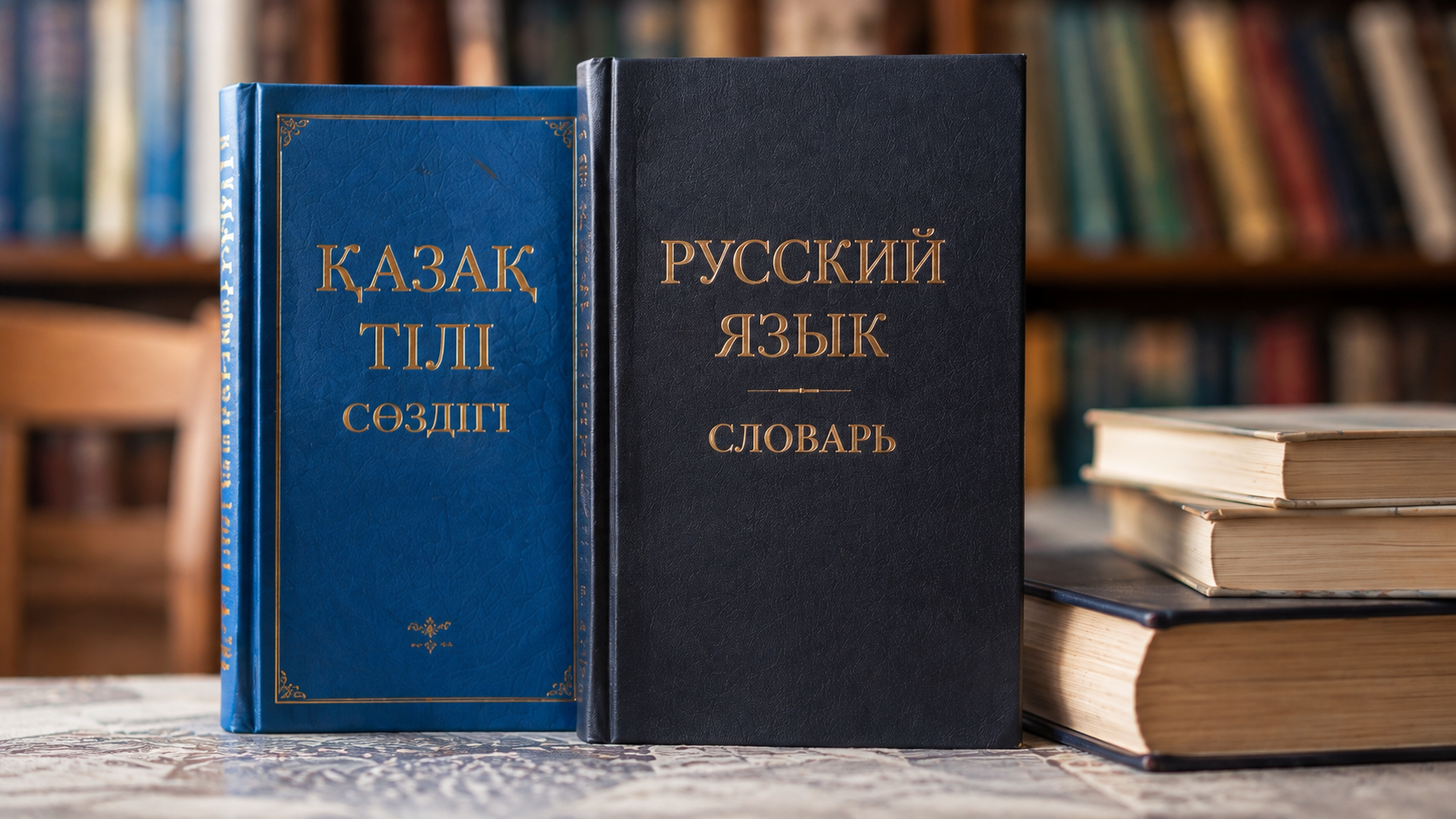
In Kazakhstan, Kazakh is the state language, while Russian is also officially used in state institutions and local government bodies.
In addition, many former Soviet republics have promoted policies that prioritize their national languages since independence, while a significant number of people continue to use Russian today.
The Russian-speaking world is therefore not a single country, but a broader linguistic region extending across multiple countries and territories.
Russia is, naturally, the central country of the Russian-speaking world.
Russian is the official language of the Russian Federation and is used in many areas of society, including government and public administration, school education, newspapers, television, and business.
Russia is also the largest country in the world by land area, extending across a vast territory from Europe to Asia. Many ethnic groups live within the country, including Tatars, Bashkirs, and Chechens, each with their own languages and cultures.
Because Russia is such a multiethnic country, Russian plays an important role as a common language through which people from different ethnic backgrounds can communicate.
Some of the republics within the Russian Federation recognize regional languages as official alongside Russian. However, Russian remains widely used in communication between ethnic groups, as well as in administration and education.
Russia is home to the largest number of Russian speakers in the world and remains the centre of the Russian-speaking world today.
In Belarus, both Belarusian and Russian are recognized as official languages.
Belarusian is the national language of the country. However, because Belarus has historically maintained close ties with Russia, a very large proportion of the population now uses Russian in everyday life.
Russian is especially common in urban areas, including the capital, Minsk. It is used in many settings, such as at home, in schools, in workplaces, on television, in newspapers, and on the internet.
Belarusian is also an official language and continues to be preserved through education, literature, and cultural activities. However, Russian is more dominant in everyday social life, and the two languages are not used in equal proportions.
Belarus is therefore characterized by the official recognition of two languages, while Russian plays a particularly significant role in daily life.
For this reason, Belarus can be regarded as one of the countries outside Russia with the strongest connection to the Russian language.
In Kazakhstan, Kazakh is designated as the state language.
At the same time, Russian is officially used alongside Kazakh in state institutions and local government bodies.
This situation is closely connected to Kazakhstan’s history as a former republic of the Soviet Union. During the Soviet period, Russian became widely established as a common language. Even today, many people use it in their daily lives and at work, particularly in urban areas such as the capital, Astana, and the country’s largest city, Almaty.
Kazakhstan is also home to a wide variety of ethnic groups, including both Kazakhs and Russians.
Russian therefore functions as a common language, or lingua franca, that allows people from different ethnic backgrounds to communicate smoothly.
Although Kazakhstan continues to promote the use of Kazakh, Russian remains an important language in administration, education, business, and everyday life.
Russian continues to be used in many countries that were once part of the Soviet Union. Examples include:
One major reason is that Russian was widely used as a common language in school education, public administration, higher education, science, and technology until the dissolution of the Soviet Union in 1991.
After gaining independence, each country introduced policies to strengthen the position of its own national language. Nevertheless, Russian is still used as a common language connecting people from different ethnic and linguistic backgrounds.
The status of Russian varies considerably from one country to another. In Kyrgyzstan, for example, Russian is recognized as an official language and is widely used in administration, education, and business.
In the Baltic states of Estonia, Latvia, and Lithuania, national-language policies became more prominent after independence, and the official status of Russian became more limited than it had been during the Soviet period.
However, Russian-speaking communities still live in these countries, and Russian continues to be widely spoken in certain cities and regions.
The role and use of Russian in former Soviet republics therefore vary greatly depending on the country and region.
Why is Russian used across so many countries and regions? The most important reason can be found in the history of the Russian Empire and the Soviet Union.
During the period of the Russian Empire, the expansion of its territory led to Russian being used in administration, education, and other official areas across an increasingly wide region.
The Soviet Union, which existed from 1922 to 1991, included 15 constituent republics, among them present-day Russia, Ukraine, Belarus, Kazakhstan, and Uzbekistan.
This vast state was home to people of many different ethnic and linguistic backgrounds. Russian therefore became widely used as a common language for communication between them. It was used in government institutions, schools, universities, the military, science, and technology, and many people learned it through education.
As a result, an environment developed in which people from different ethnic groups could communicate with one another in Russian.
When the Soviet Union dissolved in 1991, each newly independent country began to place greater emphasis on its own national language. However, Russian did not immediately disappear after having served as a common language for so many years.
Even today, Russian is used in many countries in business, higher education, international communication, media, and economic relations with other former Soviet states. It is also a practical language for people who travel to Russia for work, study, or migration.
Russian therefore continues to be used across a wide geographical area not only because of historical circumstances, but also because of its practical value as a common language connecting different countries and peoples.
The Russian-speaking world is not simply a collection of regions where the same language is spoken.
Russian functions as a common language that connects people across national borders and supports communication in many fields, including literature, music, film, academic research, and business.
For example, books, newspapers, and online articles published in Russia are also read in other countries where Russian is widely used, including Belarus and Kazakhstan.
Films, television programmes, and music produced in Russian are also enjoyed by audiences across national borders. Russian-language sources are sometimes used at universities and research institutions, and researchers from former Soviet countries may communicate with one another in Russian.
Of course, each country has its own history, culture, and language. The Russian-speaking world should therefore not be viewed as a single, uniform culture. Nevertheless, the existence of Russian as a shared language makes it possible for information and people to move between countries and regions with different cultural backgrounds.
In this sense, the Russian-speaking world can be understood as a broad linguistic and cultural region in which countries and communities with different cultures interact through the Russian language.
Russian is not spoken only in Russia. It is used in many countries and regions.
Its main characteristics can be summarized as follows:
I believe one of the attractions of learning Russian is that it allows you to connect with a wide variety of regions stretching across Eastern Europe, the Caucasus, and Central Asia.