#13 The Characteristics of Russia as a Multiethnic State
Yuri Miyajima Russian Forest

Kazakhstan is located in Central Asia and is known as a country where diverse ethnic groups and cultures coexist.
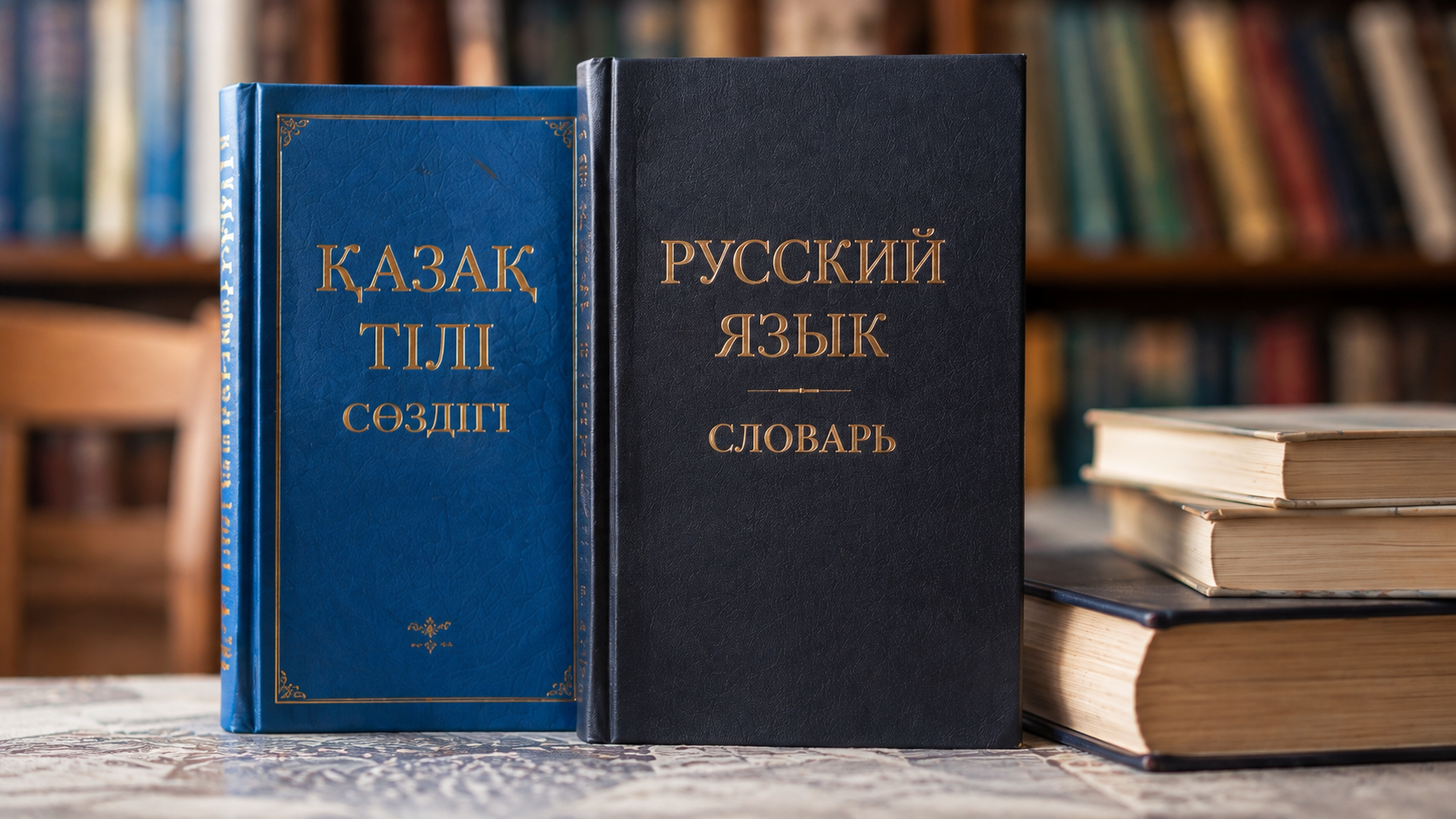
In this vast country, Kazakh is designated by the Constitution as the state language, while Russian is also widely used in public life, everyday communication, business, education, and many other areas.
In this article, I will explain why Russian is widely used in Kazakhstan, what position it holds today, and how it relates to the Kazakh language.
Kazakhstan is located in Central Asia and is the 9th largest country in the world by land area.
It borders Russia to the north, the Caspian Sea to the west, and China to the east. Its vast territory includes a wide variety of natural environments, including steppes, deserts, and mountainous regions. The capital is Astana, while Almaty is also well known as one of the country’s major economic and cultural centers.
Kazakhstan has a population of around 20 million. Ethnic Kazakhs make up the majority, but the country is also home to Russians, Uzbeks, Ukrainians, Uyghurs, ethnic Germans, and many other groups, making it a multiethnic state.
When the Soviet Union collapsed in 1991, Kazakhstan became an independent country. Today, it has one of the largest economies in Central Asia and is also known for its abundant natural resources.
In Kazakhstan, Kazakh is designated as the state language.
A state language is a language officially recognized as representing the country. It plays a central role in education, culture, and national identity, and in Kazakhstan, Kazakh fulfills this function.
Kazakh belongs to the Turkic language family and is therefore linguistically distinct from Russian. Since independence from the Soviet Union, Kazakhstan has pursued policies aimed at expanding the use of Kazakh as the national language, and its use has increased in education and public administration.
At the same time, under the Constitution of Kazakhstan, Russian may officially be used on an equal basis with Kazakh in state institutions and local government bodies. As a result, Russian continues to be widely used in administrative procedures, business, higher education, the media, and other fields.
Kazakhstan is also a multiethnic country in which different communities often have different native languages. For this reason, Russian frequently serves as a common language for communication between people from different ethnic backgrounds.
It is important to note that the terms “state language” and “official language” are sometimes confused, although they do not necessarily mean the same thing.
A state language has a strong symbolic role as the language representing the country and is often closely connected to culture and national identity. An official language, by contrast, generally refers to a language that may be used in formal procedures such as government administration and the legal system.
In Kazakhstan, Kazakh is the state language, while Russian is granted legal status allowing it to be officially used in state institutions and other public bodies. As a result, the two languages coexist in contemporary Kazakhstani society.
The widespread use of Russian in Kazakhstan has its roots in the country’s long history under the Russian Empire and the Soviet Union.
From the 18th century onward, the Russian Empire gradually expanded its influence into Central Asia, and by the latter half of the 19th century, almost all of the territory of present-day Kazakhstan had come under Russian imperial rule.
During this period, Russian came to be used in administration, the military, education, and other fields. Large numbers of Russians, Ukrainians, and members of other ethnic groups also migrated to Kazakhstan. As a result, the number of regions where Russian was used in everyday life gradually increased.
Following the Russian Revolution of 1917, Kazakhstan eventually became one of the constituent republics of the Soviet Union. Although each Soviet republic had its own languages, Russian played an important role as a common language across the Soviet Union.
Russian was used as the de facto common language in many areas, including government administration, higher education, science and technology, the military, and business. For people seeking higher education or professional advancement, acquiring Russian therefore had considerable practical importance.
During the Soviet period, industrialization and agricultural development also brought large numbers of people from Russia and other Soviet republics to Kazakhstan. This contributed to the development of a multiethnic society and further strengthened the role of Russian as a common language for communication between different ethnic groups.
After Kazakhstan gained independence in 1991, the government actively promoted Kazakh as the state language. Nevertheless, Russian had already become deeply rooted in society over a long period of history, and it continues to be widely used today in education, business, the media, government institutions, and many other fields.
Today, Kazakh is primarily written in the Cyrillic alphabet. However, the Kazakh government has been pursuing a policy of gradually transitioning the written form of Kazakh to the Latin alphabet.
One reason for this policy is the desire to strengthen Kazakhstan’s links with the international community and improve compatibility with digital technologies. It is also connected to an effort to place greater emphasis on the distinct identity of the Kazakh language and culture by moving away from the Cyrillic alphabet, which is strongly associated with the Soviet period.
However, this transition is not being carried out all at once. Cyrillic remains widely used in schools, government documents, publications, and everyday life, and the transition is being approached gradually in consideration of its impact on the population.
For this reason, Cyrillic remains the dominant writing system for Kazakh today, although the Latin alphabet is gradually being introduced. In the future, you may increasingly encounter Kazakh written in both Cyrillic and Latin scripts.
Russian, by contrast, continues to be written in the Cyrillic alphabet, and there is no policy to change this. As a result, Kazakhstan may eventually become a society in which two writing systems coexist within the same country: the Latin alphabet for Kazakh and the Cyrillic alphabet for Russian.
Kazakhstan has Kazakh as its state language, while Russian is also widely used in many areas of society.
The main characteristics can be summarized as follows:
Kazakhstan is known as a multilingual society in which Kazakh and Russian coexist.
Kazakh is an important language that supports the country’s national identity, while Russian also remains widely used in education, business, public institutions, and other areas. This linguistic environment is one of the major characteristics of Kazakhstan and reflects both its history and its multiethnic society.