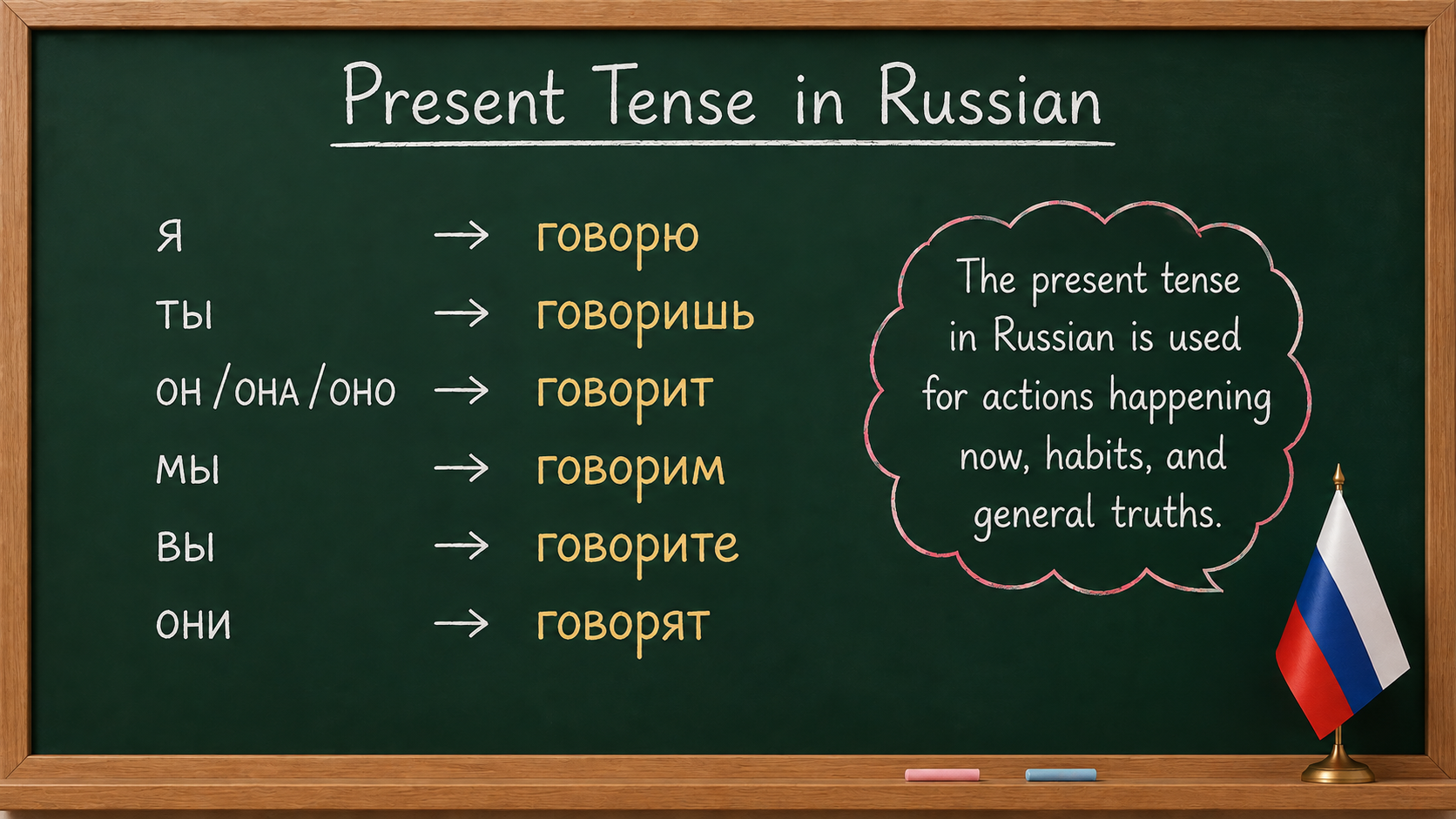
#53 How the Russian Present Tense Works
Yuri Miyajima Russian Forest


Russia is the largest country in the world by land area, with people living across an immense territory stretching from Europe in the west to the Pacific coast in the east.
Because of its vast size, Russia has regional differences in pronunciation, vocabulary, and expressions. Over the course of its long history, these linguistic differences developed alongside the culture and everyday life of each region.
In this article, I will explain what Russian dialects are, how they are classified, what characteristics they have, and how they relate to Standard Russian.
A dialect is a regional form of a language that differs in pronunciation, vocabulary, grammar, or other features. Like Japanese and English, Russian also has regional dialects.
Russia extends approximately 9,000 kilometres from east to west and contains a wide variety of natural environments and cultural regions, from the Arctic Circle to the Black Sea coast. As a result, distinctive linguistic features have developed in different parts of the country since ancient times.
In the medieval period, transportation and communication between regions were limited, which allowed slightly different ways of speaking to develop in each area. These regional differences eventually formed the dialects found in Russian today.
Standard Russian is now widespread throughout the country through school education, television, and the internet, so dialectal differences are not as pronounced as they once were. Nevertheless, regional pronunciation, vocabulary, and accent patterns are still preserved in many areas, and a person’s speech may sometimes reflect where they come from.
Russian dialects are broadly divided into Northern and Southern dialects, with Central Russian dialects, which combine features of both, distributed between them. For clarity, I will introduce them as the following three groups:
This classification is based mainly on differences in pronunciation, vocabulary, and grammar. In particular, regional patterns in the pronunciation of unstressed vowels and certain consonants are important features used by linguists to distinguish between dialect groups.
Russian dialects developed through a combination of long-standing regional linguistic differences, geographical separation, population movement, and contact with neighbouring regions. As a result, each area acquired its own characteristics in pronunciation, vocabulary, and grammar.
Central Russian dialects contain features of both Northern and Southern Russian. The speech of the Moscow region in particular had a major influence on the later development of Standard Russian.
Modern Standard Russian was shaped with the language of the Moscow region as one of its major foundations and was further refined through literature, government administration, education, and publishing. For this reason, learning Standard Russian should be your first priority when studying the language.
Northern Russian dialects have traditionally been spoken mainly in northern regions such as Arkhangelsk Oblast and Vologda Oblast.
These areas have long been characterized by forests and lakes and were relatively distant from major urban centres such as Moscow. For this reason, it is believed that some older linguistic features were preserved there for a longer period.
The best-known feature of Northern Russian dialects is a pronunciation pattern called okanye (о́канье).
In Standard Russian, an unstressed о is generally pronounced with a sound closer to “а.” For example, the word молоко́ meaning “milk” is pronounced approximately like [malako] in Standard Russian.
In Northern dialects, however, an unstressed о is often pronounced more clearly as an o sound. As a result, the same word, молоко́, may sound closer to [moloko.]
Southern Russian dialects developed mainly in southern Russia and in regions close to the borders with Ukraine and Belarus.
One of their best-known features is a pronunciation pattern called akanye (а́канье).
This refers to the pronunciation of an unstressed о with a sound closer to “а.” This feature was also inherited by modern Standard Russian, so it is likely to be the most familiar pronunciation pattern for learners of Russian today.
Southern dialects also show regional differences in consonant pronunciation and intonation.
In addition, areas close to Ukraine and Belarus may contain pronunciation patterns and vocabulary shared with neighbouring East Slavic languages as a result of long-term linguistic contact.
Central Russian dialects have traditionally been spoken mainly in and around Moscow.
The dialects of this region combine features of both Northern and Southern Russian. The speech of Moscow in particular gradually gained wider influence as the city developed into a political and administrative centre.
From the 15th century onward, the Grand Duchy of Moscow expanded its power, and Moscow became the centre of politics and government administration. As a result, the language used in Moscow influenced official communication and urban speech and gradually came to occupy an important position across a wider area.
In the 18th century, the reforms of Peter the Great promoted the development of education and publishing, while the standardization of Russian continued to advance. During the 18th and 19th centuries, Mikhail Lomonosov contributed to the development of grammatical studies and stylistic theory, while Alexander Pushkin helped establish the foundations of modern Russian by bringing spoken language and literary expression into harmony.
Through these historical developments, the Central Russian dialects centred on Moscow became one of the foundations of modern Standard Russian. The Russian used today in schools, news broadcasts, newspapers, and books continues this tradition.
When learning Russian, you generally do not need to study regional dialects at the beginning.
Textbooks, dictionaries, news broadcasts, films, and language-learning materials usually use Standard Russian. You should therefore give priority to learning its pronunciation, grammar, and vocabulary first.
Standard Russian is also widely understood throughout Russia because of education, television, and the internet. Even when visiting Russia for travel, study, or work, you are unlikely to experience serious difficulties in everyday life as long as you can communicate in Standard Russian.
Once you have made progress in your studies and become interested in Russian literature, history, or regional culture, I think it can be worthwhile to learn more about dialects.
For example, literary works and films set in regional areas may reflect local speech patterns in the way their characters speak. Understanding dialects can therefore help you appreciate such works more deeply.
Because Russia has such an extensive territory, it contains a variety of regional dialects. The main points about Russian dialects can be summarized as follows:
Learning about Russian dialects is not only a way to understand differences in language. It also helps you appreciate the history and cultural diversity of Russia as a vast country.
After learning Standard Russian, exploring its regional dialects can give you an even deeper appreciation of the richness and complexity of the language.