#79 Samovar|Water Boiler at the Heart of Russian Tea Culture
Yuri Miyajima Russian Forest

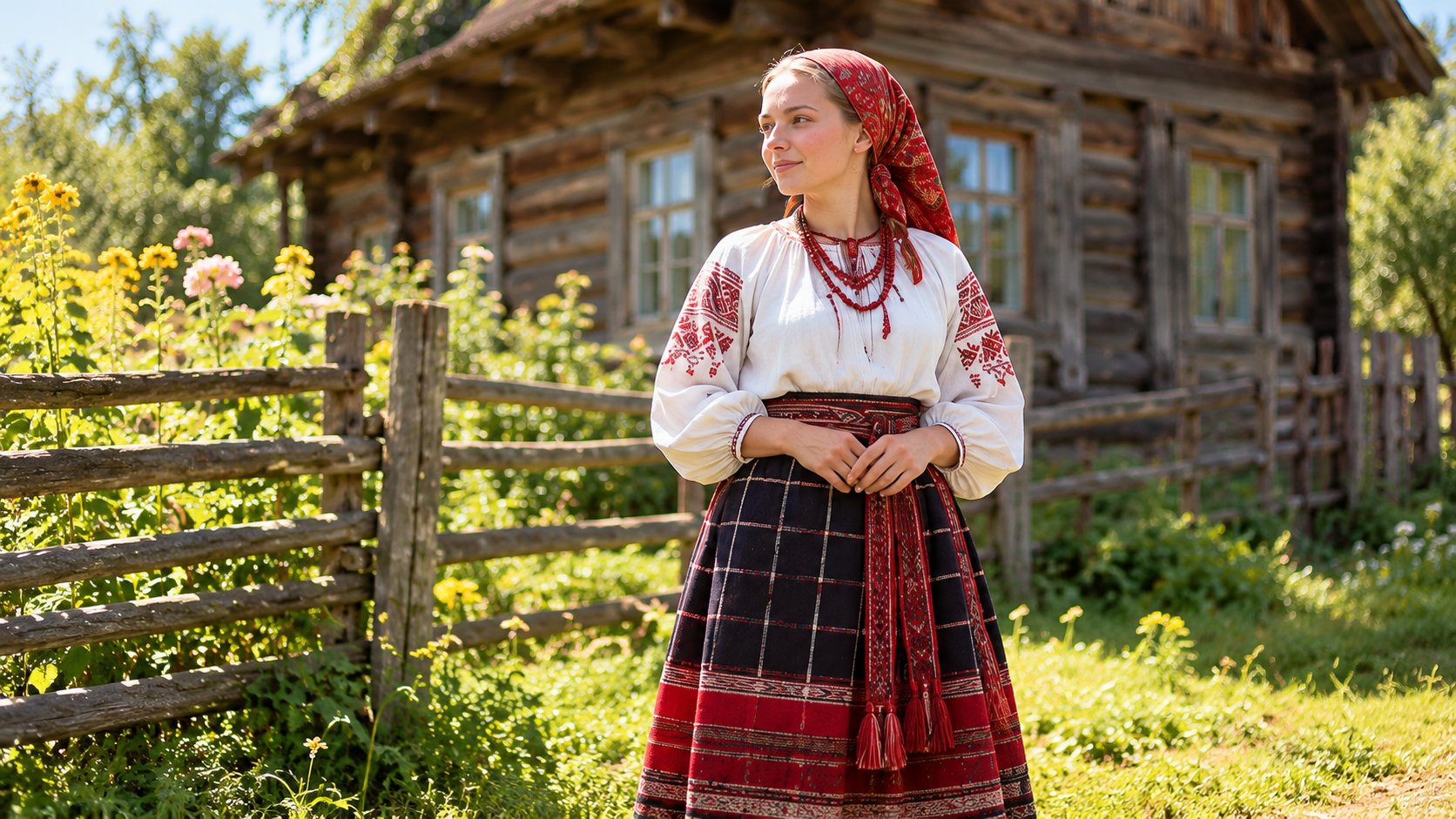
One of the traditional garments worn by women in rural Russia, particularly in the southern regions, was a skirt-like garment known as the ponyova (понёва).
The ponyova was a skirt-like garment made from plaid woolen fabric that was wrapped around the waist.
It was also closely associated with customs surrounding marriage and the transition to adulthood, giving it special significance within rural communities.
In this article, I will explain the characteristics, history, methods of wearing, and cultural significance of the ponyova.
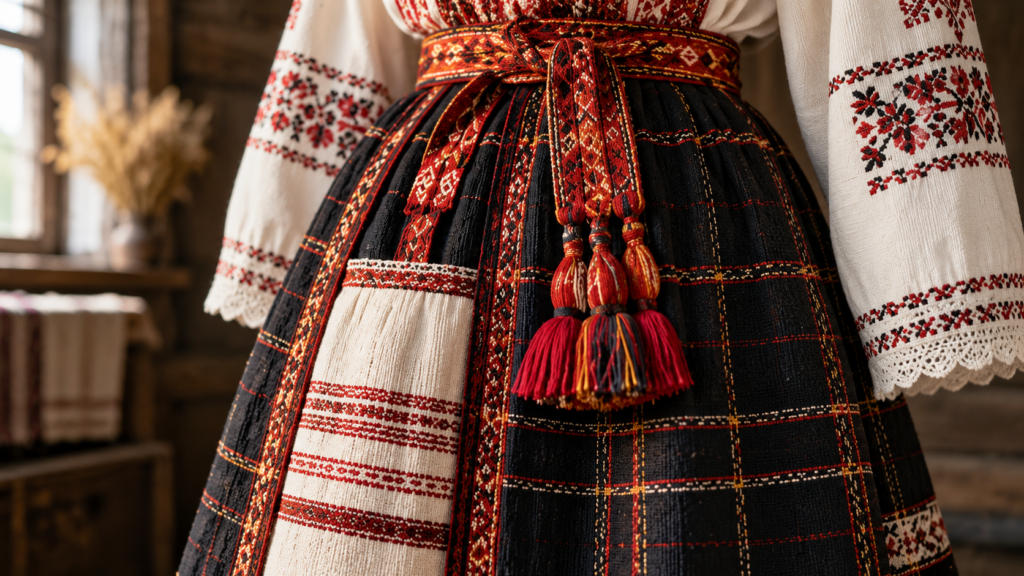
The ponyova (понёва) is a traditional women’s garment that was worn primarily in southern Russia and certain parts of central Russia.
It is a skirt-like garment made by sewing together several rectangular pieces of fabric and wrapping them around the waist. It was commonly made from woven wool, with plaid patterns featuring dark blue or black backgrounds being particularly well known.
The ponyova was worn over a long, shirt-like garment called a rubakha (руба́ха) and secured with a cord or belt around the waist. Women sometimes wore an apron over the ponyova or decorated it with embroidery and ornamental cords.
Such clothing was worn not only during everyday agricultural work and household activities but also on special occasions, including festivals and weddings.
Furthermore, the shape, colors, and patterns of the ponyova varied by region, and the garment could indicate a woman’s place of origin or marital status.
In this way, the ponyova was deeply rooted in the daily lives of women in rural Russia and reflected the culture and traditions of their communities.
The ponyova has a long history in Russian rural society.
Its origins are associated with ancient Slavic clothing traditions, and it is believed to have developed from garments consisting of fabric wrapped around the waist. Fragments of textiles have been discovered at medieval East Slavic burial sites, providing valuable evidence for the study of clothing traditions during that period.
In medieval Rus’, various clothing traditions developed according to regional living conditions and weaving techniques.
Garments related to the ponyova are believed to have been used among the East Slavs since ancient times. As regional clothing traditions developed, the ponyova became particularly characteristic of rural communities in southern Russia.
In regions such as Ryazan, Tula, and Voronezh, it became customary for women to wear a ponyova over a rubakha.
Meanwhile, in northern Russia and certain parts of central Russia, a dress-like garment suspended from the shoulders, known as the sarafan (сарафа́н), became widely popular.
During the eighteenth and nineteenth centuries, the ponyova was primarily associated with married women in rural communities.
At that time, rural women often made their clothing from fabric woven at home, and regional characteristics were reflected in the colors, patterns, and decorations of their ponyovas.
From the late nineteenth century into the twentieth century, factory-produced clothing and urban fashions gradually spread into rural areas, leading to a decline in the everyday use of the ponyova.
Today, examples of this traditional garment can be seen in museums, folk dance performances, and events celebrating traditional culture.
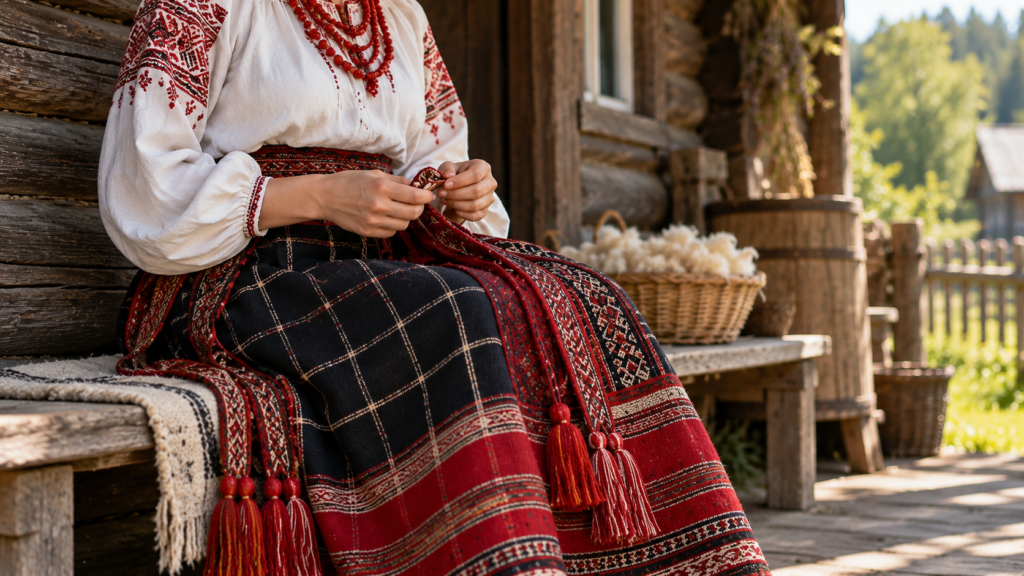
One of the most distinctive features of the ponyova is its wraparound structure, which allows it to be worn around the waist.
Many traditional ponyovas were made by sewing together several rectangular pieces of fabric. A particularly well-known form consisted of three pieces of fabric joined vertically to create a garment that covered the body from the waist down.
A cord was attached to the upper edge of the fabric. When dressing, a woman wrapped the ponyova around her waist over a rubakha (руба́ха) and secured it by tying the cord.
Some ponyovas had openings at the front or sides, while others were made by joining the fabric into a tube-like shape. In styles with openings, part of the rubakha worn underneath could remain visible. The arrangement of the fabric and the position of the openings varied by region.
The length of the ponyova also differed depending on local traditions, although many examples extended from below the knees to approximately the calves.
An apron-like garment, sometimes called a zapon (запо́н), could also be worn over the ponyova. Aprons served the practical purpose of protecting clothing from dirt, while those decorated with embroidery or brightly colored fabrics also enhanced the appearance of the overall outfit.
This structure was well suited to the daily lives of rural women engaged in agricultural work and household activities. The ponyova was therefore valued as a garment that combined practicality with decorative appeal.
The ponyova is also known as a garment closely associated with a woman’s marital status.
In traditional Russian rural society, distinctions were sometimes made between the clothing worn by unmarried and married women. In regions where the ponyova was customary, it was primarily regarded as a garment for married women.
In some communities, a girl’s first experience of wearing a ponyova signified that she had reached marriageable age or entered a new stage of life as an adult woman.
In certain regions, a special ceremony was held when a girl reached an age considered appropriate for marriage and began wearing a ponyova for the first time.
One traditional form of this ceremony involved the girl standing on a bench and jumping into a ponyova held open by her mother. While the mother encouraged her daughter to jump, the girl was expected to hesitate rather than immediately comply. This symbolic hesitation formed part of the ritual.
Putting on the ponyova in this way served as a public indication that the girl had reached an age at which she could marry.
In some regions, women also wore a ponyova for the first time during an engagement or wedding ceremony.
After marriage, the ponyova became part of a woman’s everyday clothing. Together with head coverings and other garments associated with married women, it indicated her position within the community.
Thus, beyond its practical function as clothing, the ponyova carried cultural significance as a symbol of the transition from girlhood to adulthood and of the change in social status associated with marriage.
Another representative garment of traditional Russian women’s clothing is the sarafan (сарафа́н).
The ponyova and the sarafan differ in their structure, methods of wearing, geographical distribution, and cultural roles.
The ponyova is a skirt-like garment wrapped around the waist and is primarily associated with the rural culture of southern Russia. It was often made by sewing together several pieces of fabric, with plaid woolen textiles being particularly characteristic.
The sarafan, by contrast, is a dress-like garment with shoulder straps that was widely worn in northern Russia and certain parts of central Russia. Many sarafans have a shape that widens from the chest toward the hem, and they were made from various materials, including linen, cotton, and silk.
Both garments were worn over a rubakha (руба́ха), but their structures differed. The ponyova was secured around the waist, whereas the sarafan was suspended from the shoulders.
The ponyova was also strongly associated with married women and played an important role in marriage-related ceremonies in certain regions.
The sarafan, on the other hand, was worn by both unmarried and married women and was used for a wide range of occasions, from everyday activities to festive celebrations.
Furthermore, the sarafan became popular not only in rural communities but also in urban areas, and various styles developed over time.
The ponyova, meanwhile, remained closely connected to traditional rural customs and marriage rituals, developing as a garment that strongly reflected regional cultural identities.
In this way, the ponyova and the sarafan differed not only in their appearance and methods of wearing but also in their roles within local communities. Together, they illustrate the diversity of traditional Russian clothing.
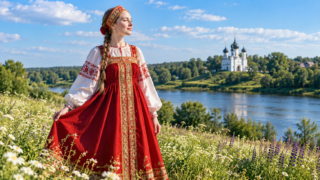
The ponyova (понёва) is a traditional skirt-like garment that was worn by women in rural Russia, particularly in the southern regions.
The main points discussed in this article can be summarized as follows:
The ponyova served as an everyday garment while also indicating a woman’s marital status and position within her community.
Today, the ponyova continues to be preserved through museum collections and traditional cultural events. It remains an important example of traditional Russian clothing that offers insight into the daily lives and history of the Russian people.