#34 Russian Abbreviations During the Soviet Era
Yuri Miyajima Russian Forest
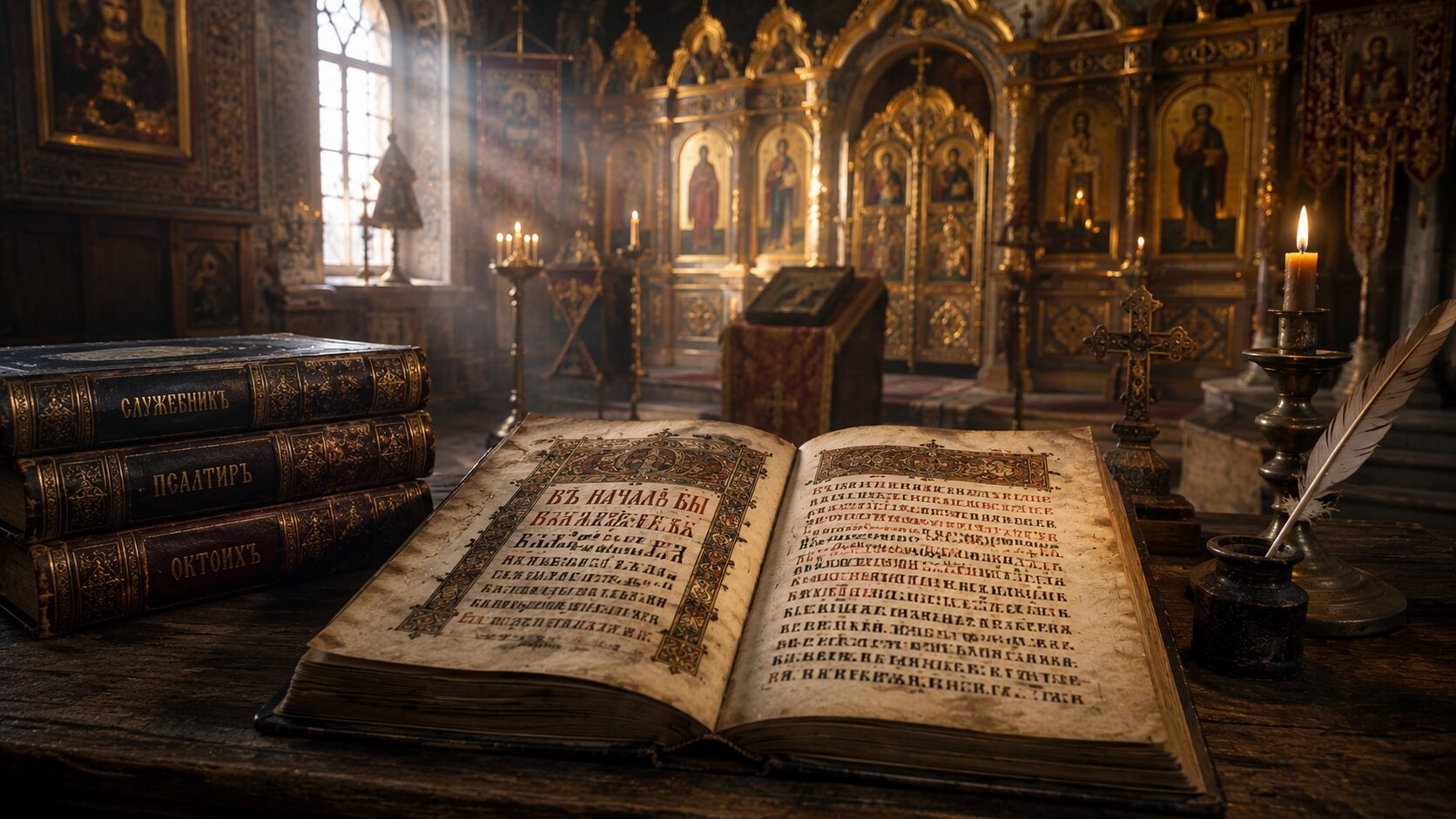
If you have ever seen photographs of Russia, you have probably noticed its beautiful churches with golden domes. Many of these churches belong to the Russian Orthodox Church and are deeply connected to Russian history and culture.
The language still used in Orthodox Christian worship today is Church Slavonic. Although it is different from modern Russian, it plays an important role in understanding the history of the Russian language, as well as Russian literature and religious culture.
In this article, I will explain what the Orthodox Church is, why Church Slavonic has been preserved to the present day, and how it relates to modern Russian.
Church Slavonic is the liturgical language used in the worship and services of the Orthodox Church.
Although it is no longer spoken in everyday life, it is still used for biblical readings, prayers, and hymns. Church Slavonic is used not only in the Russian Orthodox Church but also in several other Slavic Orthodox churches, including the Serbian Orthodox Church and the Bulgarian Orthodox Church.
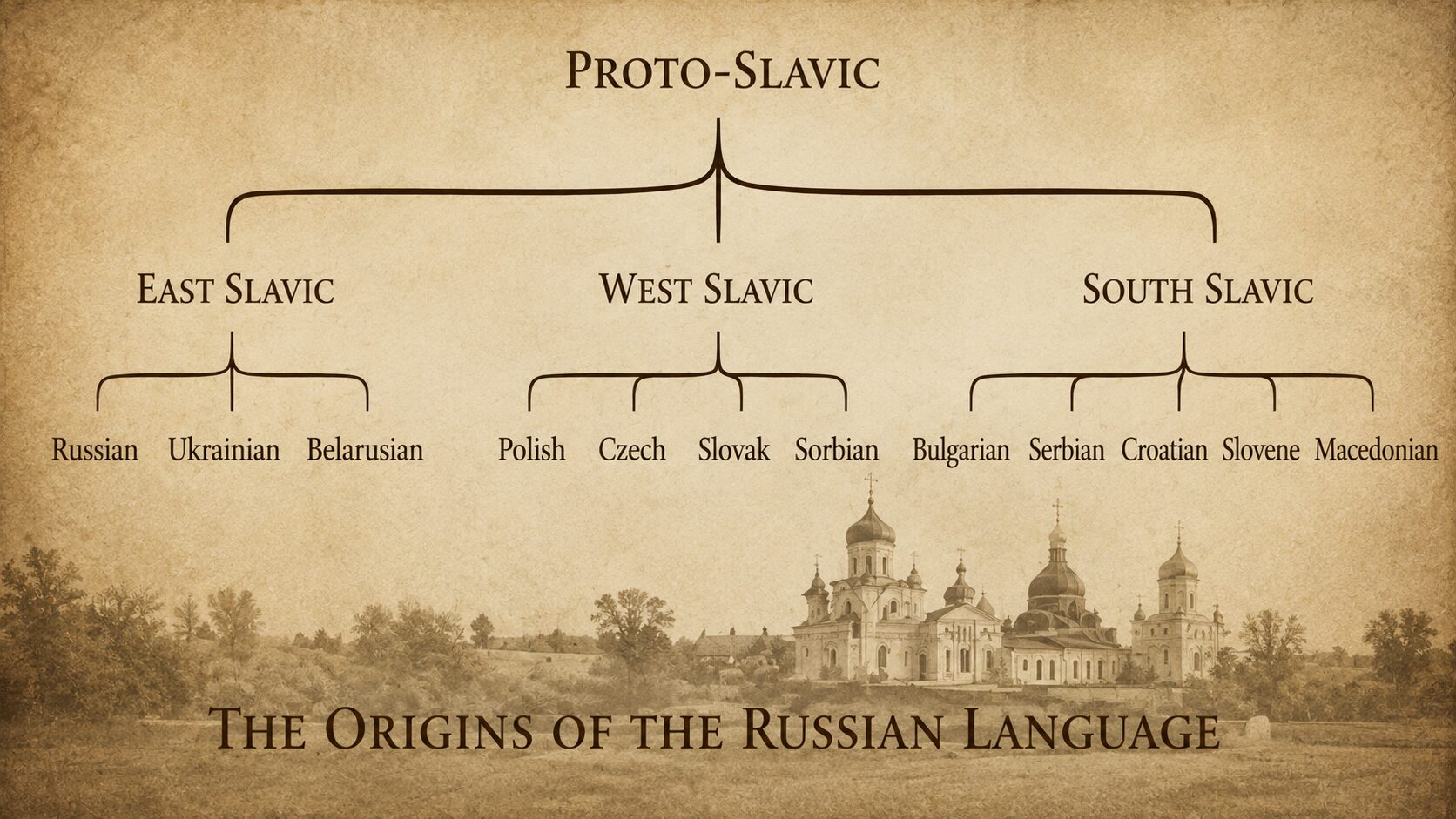
Church Slavonic is based on Old Church Slavonic, the first Slavic literary language established in the 9th century. Old Church Slavonic was developed during the missionary work of Saints Cyril and Methodius to translate the Bible and liturgical texts into the Slavic language. It later spread throughout Eastern Europe, gradually evolving as it incorporated regional linguistic features.
The Church Slavonic used today has undergone gradual changes in spelling, pronunciation, and vocabulary over the centuries. As a result, it remains very similar to Old Church Slavonic, but it is not exactly the same language.
To summarize, the relationship between the two languages can be understood as follows:
Church Slavonic evolved from Old Church Slavonic and has been preserved as a liturgical language for many centuries. Its tradition has had a profound influence on modern Russian and Russian culture.

To understand Church Slavonic, I think it is first important to understand the Orthodox Church itself.
Christianity is generally divided into three major branches:
Among these, the Orthodox Church developed as the successor to the Christian tradition of the Eastern Roman Empire, also known as the Byzantine Empire. Following the Great Schism of 1054, it developed separately from the Catholic Church of Western Europe and has continued along its own historical path.
In Russia, Orthodoxy spread at the end of the 10th century, when Vladimir I of Kievan Rus’ adopted Christianity. Over time, the Orthodox Church became deeply rooted in Russian society and influenced not only religion but also literature, music, art, architecture, and even the values of the Russian people.
Today, the Russian Orthodox Church remains the largest Christian organization in Russia, with thousands of churches and monasteries throughout the country. The onion-domed churches found in places such as the Moscow Kremlin and Saint Petersburg are internationally recognized as iconic examples of Russian Orthodox architecture.
In addition to the Russian Orthodox Church, there are many other independent Orthodox churches, including the Greek Orthodox Church, the Serbian Orthodox Church, the Bulgarian Orthodox Church, and the Romanian Orthodox Church.
Today, many services in the Russian Orthodox Church are still conducted in Church Slavonic.
The central parts of the liturgy—including biblical readings, prayers, and hymns—continue to be performed in this traditional language. Liturgical texts that have been handed down for centuries are still read today, preserving the Church’s long-standing traditions and reflecting its rich historical heritage.
You may wonder why Church Slavonic is used instead of modern Russian during worship. One of the main reasons is that the Orthodox Church places great importance on preserving its ancient liturgical traditions.
Within the Orthodox Church, prayers, scriptural readings, and hymns are regarded as precious elements of the faith that have been passed down through countless generations. Rather than completely modernizing the language, the Church continues to use Church Slavonic in order to preserve the continuity of its religious tradition and the unity of the Church across time.
Church Slavonic has also been used in worship for many centuries, and its distinctive sound and style are often regarded as contributing to the sacred atmosphere of Orthodox services.
In this respect, it is somewhat similar to the role that Latin traditionally played in the liturgy of the Catholic Church in Western Europe. Just as Latin supported the Church’s liturgical tradition for centuries, Church Slavonic has preserved the history and culture of the Orthodox Church.
In other words, Church Slavonic can be seen as a living cultural heritage that carries more than a thousand years of faith, culture, and history into the present day.
Church Slavonic has also had a profound influence on the development of modern Russian.
Many words used in formal writing—particularly in religion, philosophy, literature, and politics—entered Russian through Church Slavonic.
Examples include:
These words remain common in modern Russian, and many became established through the Bible and the traditions of the Orthodox Church.
Church Slavonic influenced not only vocabulary but also literary style and written expression. For example, writers often deliberately use Church Slavonic-derived words and expressions to create a solemn atmosphere or to depict religious themes.
In this way, much of the distinctive dignity and literary richness of the Russian language has been shaped by the fact that Church Slavonic served as an important literary language for many centuries.
Church Slavonic is a liturgical language that has preserved the tradition of Old Church Slavonic and continues to be used in the Orthodox Church today.
Its main characteristics can be summarized as follows:
If you are learning Russian, I believe it is well worth acquiring a basic understanding of Church Slavonic.
Although you will not use it in everyday conversation, learning about its long history will deepen your understanding of both the Russian language and Russian culture.