#15 Russian Dialects
Izumi RUSSIAN FOREST

When you begin learning Russian, one of the first things you may find confusing is the Cyrillic alphabet.
English and French use the Latin alphabet, whereas Russian uses an entirely different writing system. For this reason, many learners initially view Russian as a difficult language because they must first learn a new set of letters.
However, the Cyrillic alphabet is not as difficult as many people imagine. Although some of the letters may look unfamiliar, each one generally has a consistent pronunciation, and the relationship between spelling and pronunciation is more regular than in English or French.
In this article, I will explain what the Cyrillic alphabet is, how it developed, what its main features are, and what you should know when learning it as part of your Russian studies.
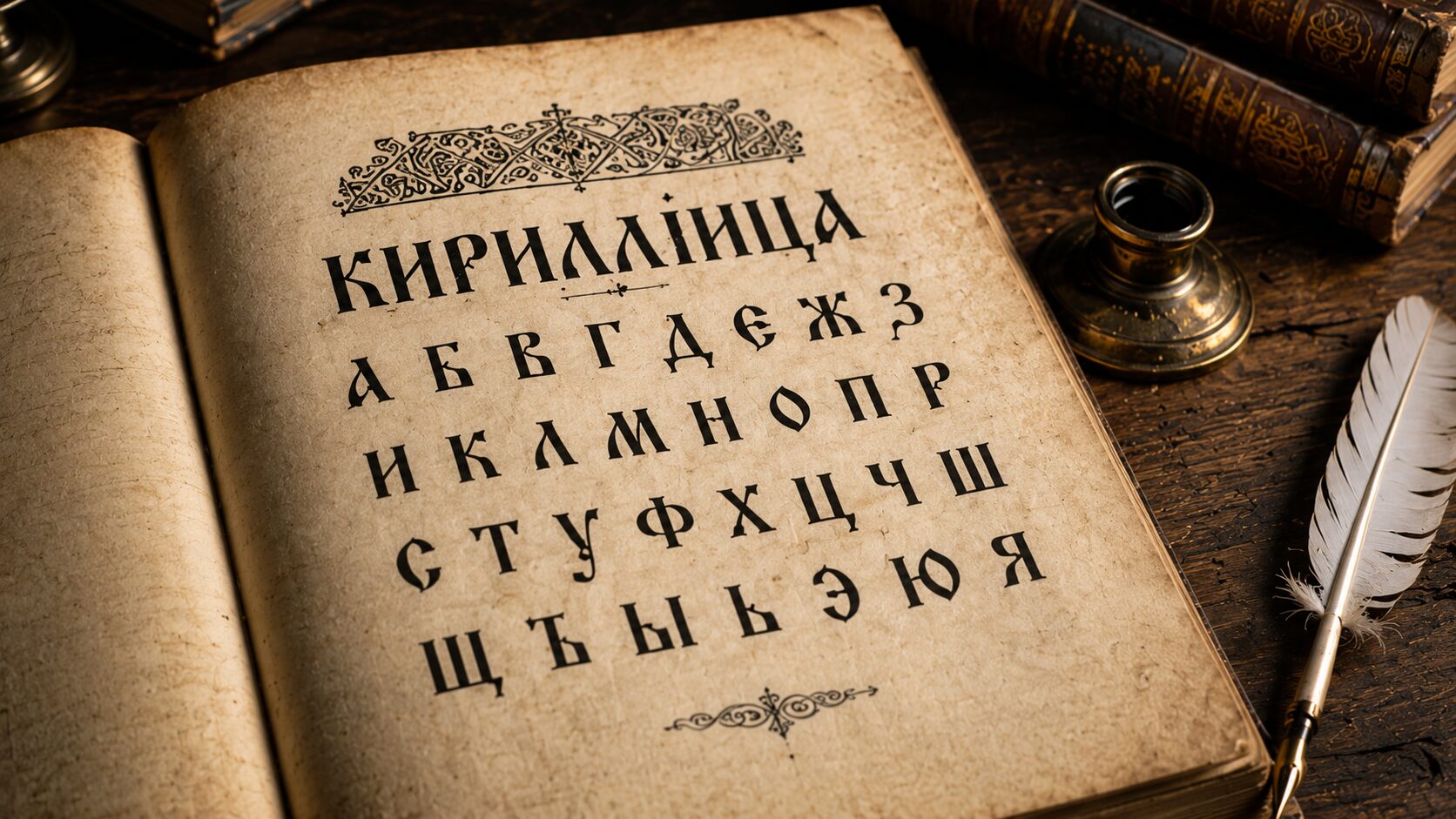
The Cyrillic alphabet is a writing system used for Russian and various other languages spoken across Eastern Europe, Central Asia, and surrounding regions.
Today, it is used not only for Russian but also for several Slavic languages, including Bulgarian, Belarusian, Ukrainian, and Macedonian.
It has also been adopted for non-Slavic languages such as Mongolian and Kyrgyz. Kazakh is still widely written in Cyrillic, although efforts to transition to the Latin alphabet have also been underway.
Modern Russian uses a Cyrillic alphabet consisting of 33 letters. Like the Latin alphabet used in English and French, it is an alphabetic writing system, but the shapes of the letters and the sounds they represent are different.
At first glance, Cyrillic may appear complicated. However, many letters resemble letters in the Latin alphabet. At the same time, letters such as Ж, Щ, and Ы represent sounds that are characteristic of Russian and contribute to its distinctive pronunciation.
The Cyrillic alphabet is often regarded as the first major obstacle in learning Russian. However, each letter generally has a fixed reading, and the relationship between spelling and pronunciation is relatively regular. Once you have learned the letters, progressing with your Russian studies becomes considerably easier.
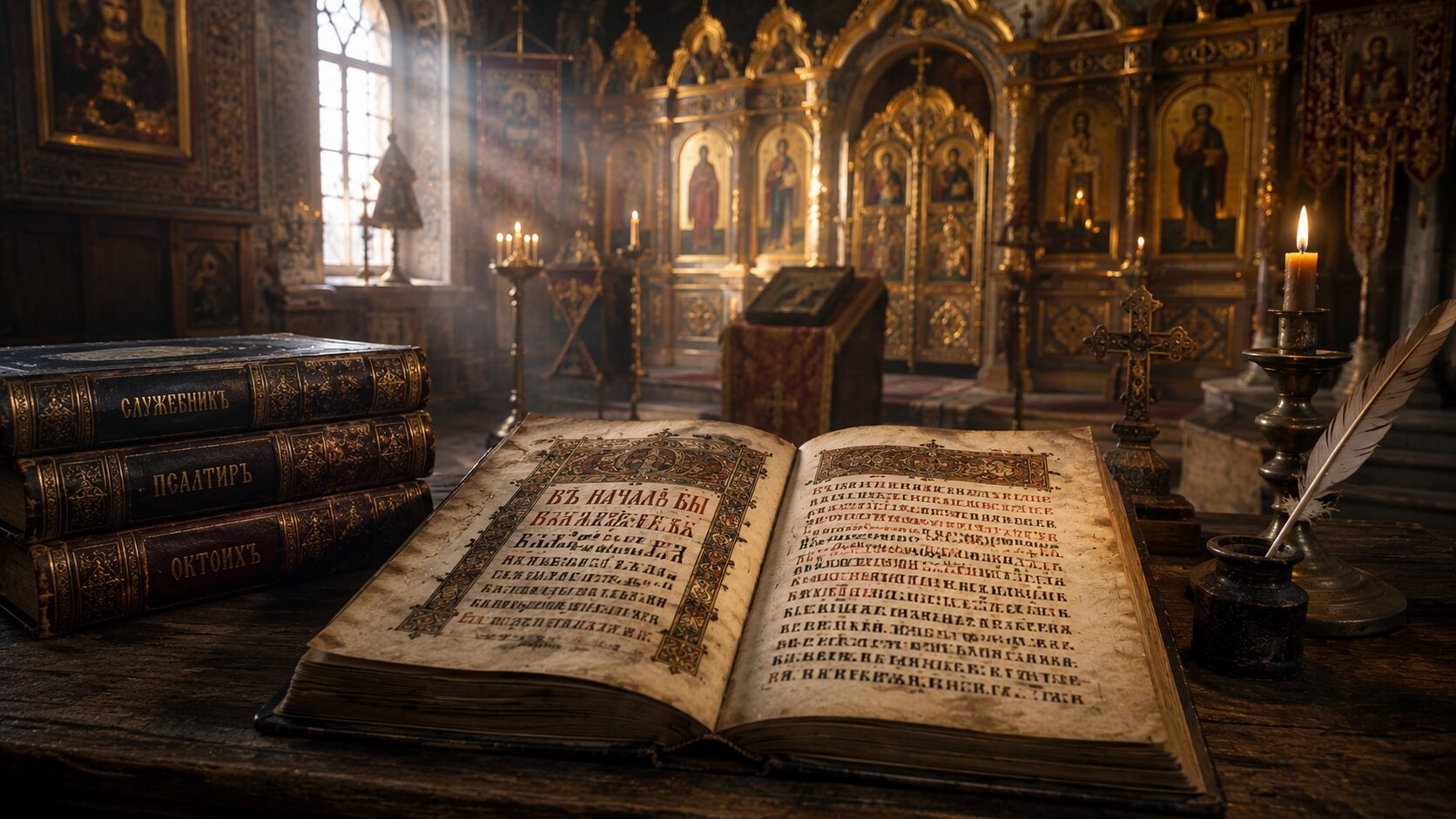
The origins of the Cyrillic alphabet are closely connected with Christian missionary activity among the Slavic peoples during the ninth century.
At that time, the Byzantine Empire sought to spread Christianity among Slavic communities living in Central and Eastern Europe. However, Greek and Latin, the languages commonly used in religious services and biblical texts, were not easily understood by the Slavic population.
To make Christian teachings accessible in the Slavic language, the Byzantine missionary brothers Cyril and Methodius translated the Bible and liturgical texts into Slavonic.
For this purpose, Cyril is traditionally believed to have played a central role in creating the Glagolitic alphabet.
It is important to understand that Cyril and Methodius did not directly create the Cyrillic alphabet used today. The script they used was Glagolitic, whose letter forms differ considerably from those of modern Cyrillic.
Later, their disciples moved to the First Bulgarian Empire, where they continued their work in Slavonic education, translation, and religious activity. The Preslav Literary School, located in what is now northeastern Bulgaria, became an especially important centre for producing texts in the Slavic language.
During this period, a new writing system is believed to have developed. It was largely based on the Greek alphabet but included additional letters for sounds specific to the Slavic languages. This writing system became the early Cyrillic alphabet.
Many early Cyrillic letters closely resembled contemporary Greek letters. However, new characters were added to represent Slavic sounds that did not exist in Greek.
The name “Cyrillic” honours Cyril for his major contribution to the development of Slavic written culture. In other words, the alphabet was named after him in recognition of his achievements rather than because he personally created it in its final form.
The Cyrillic alphabet later spread from the Slavic cultural centres of Bulgaria to regions such as Serbia and Kievan Rus’. After Kievan Rus’ adopted Christianity, Cyrillic began to be used for religious and administrative documents.
As the alphabet spread, it changed according to the languages and historical circumstances of each region. The modern Russian alphabet of 33 letters is the result of centuries of simplification, reform, and standardisation of the early Cyrillic script.
By learning this history, you can see that Cyrillic is not merely a system for writing Russian. It is also an important cultural heritage that supported the development of religion, education, and literature in the Slavic languages.
The Russian Cyrillic alphabet contains 33 letters in total. These consist of ten vowels, 21 consonants, and two signs that do not have sounds of their own: ь and ъ.
The table below shows the letters used in modern Russian.
| Uppercase | Lowercase | Approximate English Sound |
|---|---|---|
| А | а | a in father |
| Б | б | b in book |
| В | в | v in voice |
| Г | г | g in go |
| Д | д | d in dog |
| Е | е | ye in yes (or e after consonants) |
| Ё | ё | yo in yoga |
| Ж | ж | zh in vision |
| З | з | z in zoo |
| И | и | ee in see |
| Й | й | y in boy |
| К | к | k in kite |
| Л | л | l in lamp |
| М | м | m in mother |
| Н | н | n in name |
| О | о | o in more (stressed) |
| П | п | p in pen |
| Р | р | Rolled r |
| С | с | s in sun |
| Т | т | t in top |
| У | у | oo in boot |
| Ф | ф | f in fish |
| Х | х | Similar to ch in Scottish loch |
| Ц | ц | ts in cats |
| Ч | ч | ch in chair |
| Ш | ш | sh in ship |
| Щ | щ | Soft, long sh sound |
| Ъ | ъ | No sound |
| Ы | ы | No exact English equivalent |
| Ь | ь | No sound; softens the preceding consonant |
| Э | э | e in met |
| Ю | ю | yu in universe |
| Я | я | ya in yard |
Russian distinguishes between uppercase and lowercase letters.
Most letters are also pronounced according to relatively consistent rules. Compared with English, it is less common for a single letter or combination of letters to have several unrelated pronunciations. Once you learn the basic pronunciation rules, you can predict the pronunciation of many Russian words from their spelling.
One important exception is that vowel pronunciation can change depending on stress. You therefore need to learn the stressed syllable of each word. Even so, there are comparatively fewer situations in which you must memorise the relationship between spelling and pronunciation separately for every word, as is often necessary in English.
Another notable feature is that many Cyrillic letters resemble Latin letters. For example, А, К, М, О, and Т are similar in both appearance and pronunciation to their Latin counterparts.
However, some letters, including В, Н, Р, and С, look familiar but represent different sounds. You should therefore pay particular attention to these letters when you first begin learning Russian.
Russian also contains letters that do not exist in the Latin alphabet, including Ж, Ц, Ч, Ш, Щ, and Ы. These letters represent sounds that are characteristic of Russian and are essential for developing natural Russian pronunciation.
Another distinctive feature is the presence of the soft sign ь and the hard sign ъ. These signs are not pronounced independently, but they play an important role by affecting the pronunciation of the letters around them.
The Cyrillic alphabet is one of the most important features of the Russian language. Its main characteristics can be summarised as follows:
The Cyrillic alphabet may feel like the first major obstacle in learning Russian, but once you have learned the letters, the rest of your studies becomes much easier.
At first, the unfamiliar shapes may seem confusing. However, if you learn the letters and their pronunciations one by one, you will find that Cyrillic is not an especially difficult writing system. In fact, understanding its regular patterns can help you appreciate the structure and character of the Russian language more deeply.