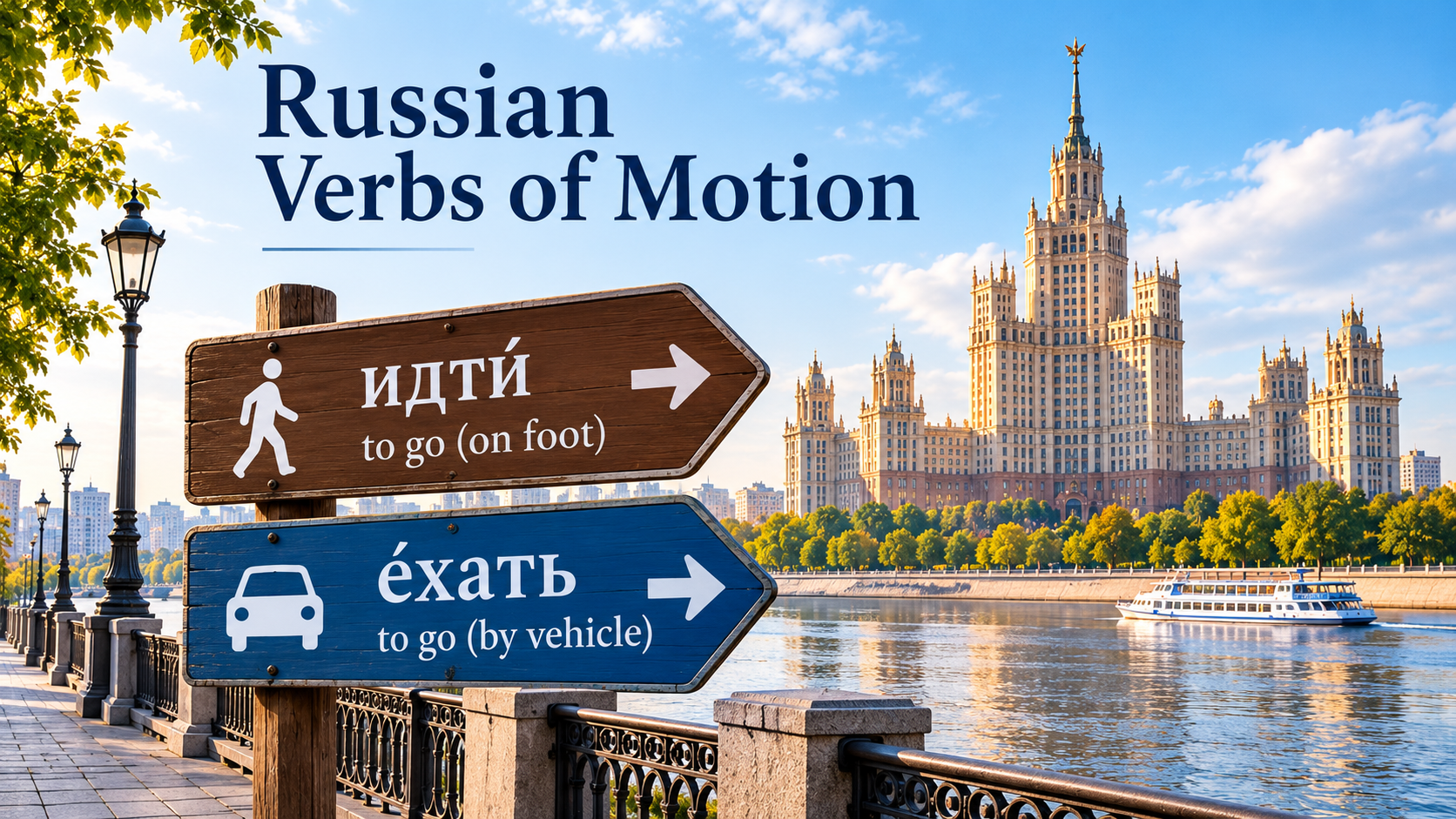
#64 Basics of Russian Verbs of Motion
Yuri Miyajima Russian Forest


When speaking Russian, it is important to understand not only correct grammar and pronunciation, but also the culture and etiquette behind the language.
Russian has many distinctive customs concerning how you speak to someone you are meeting for the first time, how you address people, and how you exchange greetings. By understanding these differences, you will be able to communicate more naturally.
In this article, I will introduce the basic points of etiquette that you should know when speaking Russian.
When beginning a conversation in Russian, it is important to greet the other person properly.
When speaking to someone at work, at school, in a shop, or in a similar setting, it is customary to begin with Здра́вствуйте (Hello). If you immediately ask a question or make a request without greeting the other person, you may sound abrupt or unfriendly.
Здра́вствуйте is a polite greeting that you can use with someone you are meeting for the first time, an older person, a shop assistant, or a business contact. Because it can be used in a wide range of situations, it is one of the first Russian expressions you should learn.
With close friends and family members, you can use the more casual greeting Приве́т (Hi or Hello). However, using Приве́т immediately with someone you have just met or in a formal setting may create the impression that you are being overly familiar.
Therefore, when you are unsure about your relationship with the other person, it is safer to use the polite Здра́вствуйте.
You can also use the following greetings depending on the time of day:
When meeting a close acquaintance, you may also follow your greeting with Как дела́? (How are things?). To ask more politely, you can use an expression such as Как у вас дела́? (How are you?).
When leaving, you should also avoid walking away without saying anything. Common expressions include До свида́ния(Goodbye) and Всего́ до́брого (All the best or Goodbye). Between people who know each other well, Пока́ (See you or Bye) is often used.
In this way, exchanging greetings both when meeting and when parting is a basic way of showing respect in Russian conversation.

In Russian, you should generally use polite language when speaking to someone for the first time, an older person, or a professional contact.
One of the most important distinctions is between the 2nd-person pronouns ты and вы, both of which can mean “you.”
ты is used with family members and close friends, while вы is the polite form used to show respect. It is customary to use вы with someone you are meeting for the first time and to switch to ты after your relationship becomes closer.
However, in Russia, people do not necessarily begin using ты automatically simply because they have become more familiar with one another. Depending on age and social position, people may continue using вы for a long time. In other cases, you may switch to the more familiar form only after the other person suggests it by saying:
For this reason, when you are unsure about the appropriate level of familiarity, you should begin by using вы.

In Russian, the way you address someone changes according to your relationship with that person and the context of the conversation.
In workplaces, schools, and formal situations, people may be addressed using a combination of their first name and patronymic. A patronymic is a name derived from the person’s father’s first name and is used to show respect.
For example, if a man’s first name is Ива́н (Ivan) and his father’s name is Пётр (Pyotr), he may be addressed as Ива́н Петро́вич (Ivan Petrovich).
Among close friends and family members, shortened forms of names and affectionate forms are commonly used. For example, Алекса́ндр (Alexander) may be shortened to Са́ша (Sasha), while Екатери́на (Ekaterina) may be shortened to Ка́тя (Katya).
However, you should not use these familiar forms freely with everyone. Addressing someone you do not yet know well by a shortened or affectionate name may make you sound overly familiar.
When meeting someone for the first time, it is therefore best to use the name by which they introduce themselves and observe how other people address them. If they ask you to call them by a particular name, you should follow their preference.
The fact that a person’s form of address reflects the degree of closeness between speakers is one of the distinctive features of Russian.


To communicate smoothly in Russian, it is important to express thanks and apologies clearly.
To say “thank you” in Russian, you can use Спаси́бо (Thank you). You can use this expression in many everyday situations, such as when receiving an item from a shop assistant or when someone gives you directions.
To express stronger gratitude, you can say:
When you want to specify what you are thanking someone for, you can use the structure Спаси́бо за … (Thank you for …).
When someone thanks you, you can reply with Пожа́луйста (You’re welcome).
The word пожа́луйста can also mean “please” or “here you are.” When making a request, adding пожа́луйста makes your words sound more polite, as in:
Two common Russian expressions meaning “Excuse me” or “I am sorry” are Извини́те and Прости́те.
Извини́те can be used in a wide range of everyday situations, such as when getting someone’s attention, asking for directions, or accidentally bumping into someone. It functions in a similar way to the English expressions “Excuse me” and “I’m sorry.”
Прости́те can also be used when apologizing or getting someone’s attention. In many situations, it is interchangeable with Извини́те, although depending on the context, it may convey a slightly stronger sense of asking for forgiveness.
With someone you know well, you can use the singular informal forms Извини́ and Прости́. With someone you are meeting for the first time, an older person, or a group of people, you should generally use the polite plural forms Извини́те and Прости́те.

To have pleasant conversations in Russian, it is important to understand not only vocabulary and grammar but also basic conversational etiquette.
The main points of Russian conversation etiquette can be summarized as follows:
Understanding Russian conversation etiquette is just as important as learning the language itself.
By communicating with an awareness of cultural differences, you will be able to make your conversations in Russian more natural and enjoyable.